- Veterinary clinic vending machines work when people wait: 24-hour emergency hospitals, specialty centers and busy multi-vet practices. A one-doctor clinic rarely carries one.
- AVMA's 2025 sourcebook puts dog owners at 42.6 percent of US households (56.3 million) and cat owners at 32.6 percent (43.1 million), so the visitor pool is large.
- Overnight emergency staff and anxious owners are the best buyers. A routine-checkup clinic closes at 6 p.m. and has a short wait.
- Stock water, coffee, comfort snacks and simple meals. Add a few pet-owner-friendly picks, like wipes and treats, if the clinic allows.
- The practice manager or owner decides. Pitch the staff break room first, then a lobby unit if they say yes.
Veterinary clinic vending machines pay when the building keeps people waiting and keeps lights on late. That means the 24-hour animal hospital at 2 a.m., not the one-doctor clinic that closes at five. If you want a location where the crowd is anxious, hungry and stuck for hours, this is it, and almost nobody is pitching these buildings.
Part of our complete guide: how to find vending machine locations.
Are veterinary clinics good vending machine locations?
For two kinds of clinic, yes. The first is the 24-hour emergency and specialty hospital. Owners wait for hours in a lobby while a pet is in surgery or on a drip. The nearest food is often closed. Night-shift technicians and vets also need something to eat.
The second is the large general practice with several vets, a boarding wing or a grooming department. That is 25 or 30 staff, a full parking lot, and a break room.
A small practice with one doctor and three techs is a skip. Appointments run 20 minutes, the lobby empties fast and you cannot make the stop pay.
The audience is big. The American Veterinary Medical Association's 2025 sourcebook reports that 42.6 percent of US households own a dog (56.3 million households) and 32.6 percent own a cat (43.1 million) (AVMA, U.S. pet ownership statistics). Those owners average around $598 a year on veterinary care for dogs and $529 for cats, so they visit.
Veterinary clinics in VendBuddy's own data
This is VendBuddy's own Lead Finder data as of October 4, 2026. We have scored 86 veterinary clinics across 68 regions. They carry a median of 277 Google reviews and an average rating of 4.57 stars. A review count in the hundreds tells you a clinic is busy, but not how many people work there, so check headcount before you pitch.
No operator has searched veterinary clinics by name yet. Healthcare searches overall came to 29 from 19 operators across 24 ZIP codes since April 2026. The starting location score for the healthcare family is the default 55. That is a lead worth qualifying, not a sure thing, and the 24-hour hospitals deserve more attention than the score gives them.
Picture the machines paying you while you sleep
That’s the real promise of vending — income that doesn’t cost you your time, and a life on your own terms. VendBuddy turns this guide into a step-by-step plan so you actually build it instead of just reading about it. Start free today.
Start building free →How a vet clinic runs
- Hours. A general practice runs weekdays, 8 a.m. to 6 p.m., with some Saturdays. An emergency hospital is open every hour of every day, with the biggest crowds in the evenings and on weekends.
- Who is inside. Owners with pets in carriers, kids, techs, vets and receptionists. In emergencies, whole families wait together.
- How long. A checkup is 30 minutes. An emergency visit can run three to eight hours. Longer wait, higher spend.
- What competes. A coffee station, a water dispenser, a fast food drive-through down the road. Overnight, nothing competes at all.
- The rule. Keep food out of exam areas and keep the lobby clean. Many clinics already put out a no-food-near-animals sign, so the machine goes in a corner with a hard floor, away from pet traffic.
Boarding and grooming add a second stream of visitors. People who drop off a dog for a weekend stay five minutes. People who pick up often wait while a bath finishes or a discharge sheet is written. Ask the front desk which day is busiest, because one clinic can have a quiet Tuesday and a packed Saturday morning. A machine should be sized to the average day, not to the best one.
Specialty centers, such as cardiology, oncology and surgery referral hospitals, are worth a call too. Their visits are long, owners often drive an hour to get there, and they sit in the lobby through the procedure. Those lobbies are the closest thing to an airport gate that a small operator can reach.
What to stock in a veterinary clinic machine
Pick a unit that is easy to wipe down and does not rattle. A glass-front combo works, and a smart fridge suits an emergency hospital that wants real food after midnight.
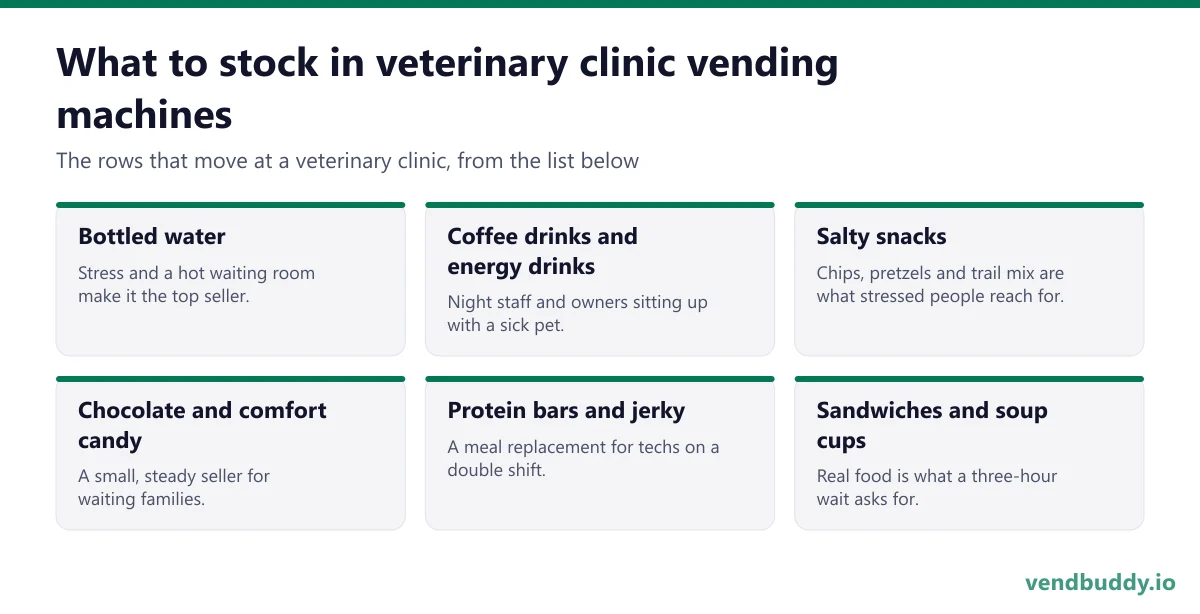
- Bottled water. Stress and a hot waiting room make it the top seller.
- Coffee drinks and energy drinks. Night staff and owners sitting up with a sick pet.
- Salty snacks. Chips, pretzels and trail mix are what stressed people reach for.
- Chocolate and comfort candy. A small, steady seller for waiting families.
- Protein bars and jerky. A meal replacement for techs on a double shift.
- Sandwiches and soup cups. Real food is what a three-hour wait asks for. A smart fridge handles it.
- Tissues, hand sanitizer and pet wipes. Small non-food rows add sales and fit the setting. Ask the clinic first.
Rows turn faster than you expect in an emergency lobby, so plan a visit twice a week at first and adjust after you see the sell-through. If kids are common in the lobby, keep a row of juice boxes and fruit snacks at hand height.
Who signs at a veterinary clinic, and what to say
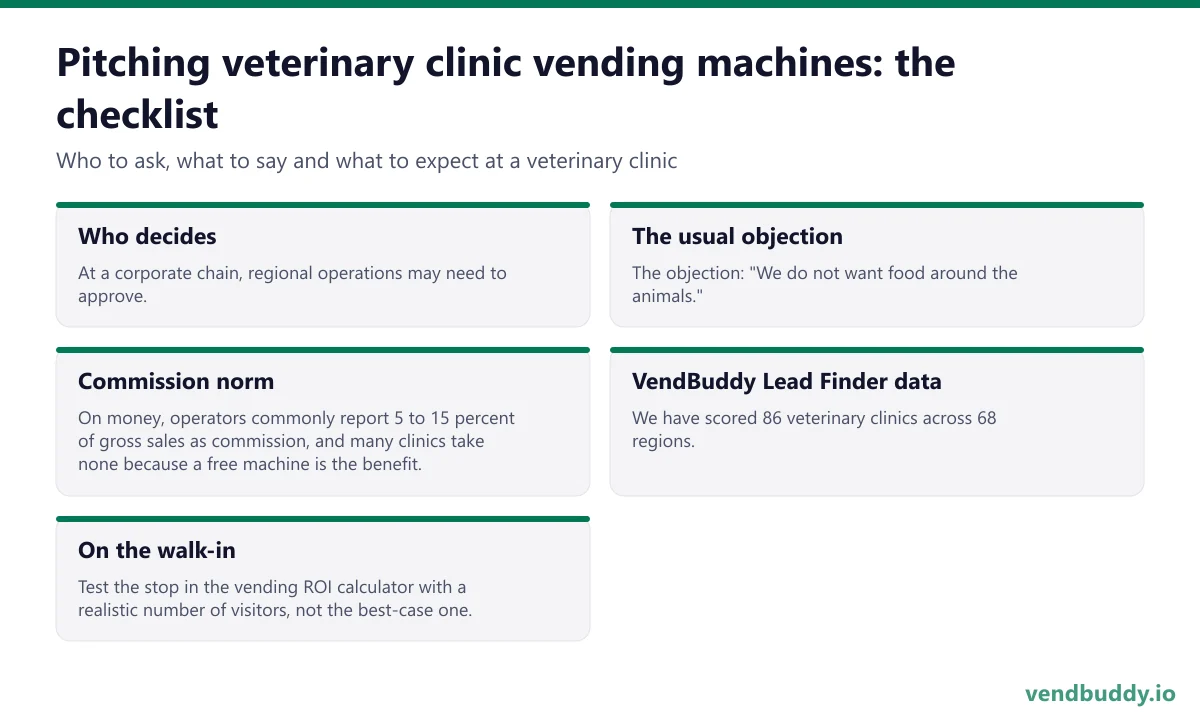
The practice manager or hospital administrator decides, usually with the owner or lead veterinarian. At a corporate chain, regional operations may need to approve. Ask the receptionist: “Who handles vendors for the building?” Lead Finder does not carry a dedicated title list for veterinary clinics yet.
Opener: “I put free vending machines in places where people wait. A machine in your lobby or staff room means your overnight team and your clients can get water and food at 2 a.m. I handle stocking and cleaning, and you do not pay for anything.”
The objection: “We do not want food around the animals.” The answer is a placement away from the exam rooms, in a sealed machine, with wrapped products only. Offer to move it or take it out in 30 days if there is a problem.
On money, operators commonly report 5 to 15 percent of gross sales as commission, and many clinics take none because a free machine is the benefit. See vending machine commission rates. Test the stop in the vending ROI calculator with a realistic number of visitors, not the best-case one.
On the walk-in, check the evening and weekend hours, how many staff are on the late shift, and where the water and power are. Get terms in writing; vending machine contracts 101 shows what to include.
How to find veterinary clinics near you
The Lead Finder can pre-select this venue type: Find veterinary clinics near you in Lead Finder. It scores each clinic and lists the contact it finds.
Two free methods work. In Google Maps, search “24 hour emergency vet” and “animal hospital near me”, and focus on the results with longer hours. Then do a drive-by test: stop by at 7 p.m. on a weeknight and count the cars. A packed lot at that hour is a busy waiting room.
What Lead Finder adds is the best contact on file, a score for each clinic and a radius, so you can sweep every animal hospital within 25 miles. For the full method, see how to find vending locations.
One good 24-hour animal hospital can be a first placement that sells every night of the week. Find veterinary clinics near you in Lead Finder and look for the ones that never close.
Frequently Asked Questions
Are veterinary clinics good vending machine locations?
Some are. 24-hour emergency hospitals and large multi-vet practices do well because owners wait for hours and night staff have few food options. A one-doctor clinic with short appointments usually does not carry a machine.
What sells best in a vet clinic vending machine?
Bottled water, coffee drinks, salty snacks, chocolate, protein bars and sandwiches. Anxious owners and night-shift techs buy comfort food and caffeine. Add tissues and sanitizer if the clinic agrees.
How much commission does a vet clinic expect?
Operators commonly report 5 to 15 percent of gross sales. Many clinics take none and prefer a free machine that helps staff and clients. Offer a monthly sales report and let the manager choose the products.
Can I put a vending machine in a vet clinic waiting room?
Often yes, if it sits away from exam rooms and holds only wrapped products. Many clinics keep food away from animals. Ask the manager where it can go, and offer to move it if there is a concern.
What is selling, which buildings say yes, and the numbers before you buy a machine. Free, confirm from your inbox, unsubscribe in one click. Refer one friend and get 25 VendBuddy credits.
Every operator we talk to wants fewer cold calls. The ones who get there have a Google Business Profile and a simple site a manager can check before replying. AI builders make that an evening job now. Wix is the mature site builder; Base44 also builds working tools like a quote form. Start with the AI website walkthrough or Wix vs Base44.
General information, not legal, tax or financial advice. Rules change, so check the official source. Revenue and income figures are examples, not promises. See our terms.