Tourism gets the headlines, but the real Orlando vending engines are Lake Nona's medical city, the modeling-and-simulation cluster east of UCF, and the I-4 corridor logistics belt — three captive-employee zones where national operators are stretched thin and growth is outrunning coverage every quarter.
- Vending locations in Orlando: what the data shows
- What the Orlando numbers mean for operators and building owners
- Is Orlando a good place to start a vending machine business?
- Orlando Vending Market Overview
- Top Industries Driving Vending Demand in Orlando
- Best Placement Districts in Orlando
- FL Licenses, Permits, and Sales Tax for Vending in Orlando
- Commission Rates and Negotiation in Orlando
Free to search. 5 free contact reveals, no card.
Property owners and managers: tell us about the site and we pass it to an operator who covers Orlando, if one is in range.
Request a free machine →- Tier-2 metro at 2.7M people, the third-largest in Florida and one of the fastest-growing in the US.
- Healthcare (Lake Nona Medical City, AdventHealth, Orlando Health, Nemours), simulation and defense (Lockheed Martin Orlando, the Central Florida Research Park), tourism back-of-house, and aviation (MCO airport, the airport-area logistics belt) drive vending demand.
- Lake Nona, Maitland / Lake Mary, the UCF research park, and the I-Drive tourist corridor are the four highest-density placement zones — but the theme park interiors are 100% locked.
- Florida charges 6.5% sales tax in Orange County (state 6 + Orange 0.5); no state vending operator license; FDACS handles food handler requirements.
- Typical commission runs 8–10% in suburban Class A; theme-park back-of-house is contracted; Lake Nona medical office buildings often work on product-credit basis.
Free tools: vending ROI calculator · revenue calculator by property type · route time calculator · State of Vending 2026 report · all free tools
- Is Orlando a good place to start a vending machine business?
- Orlando Vending Market Overview
- Top Industries Driving Vending Demand
- Best Placement Districts in Orlando
- FL Licenses, Permits, and Sales Tax
- Commission Rates and Negotiation
- 3-Day Starter Route in Orlando
- Competition and Underserved Pockets
- Orlando Vending FAQ
Vending locations in Orlando: what the data shows
Sorted by Google category, Orlando’s 130 listings put restaurants and cafes first at 21 (16.2%), ahead of apartment communities and property managers at 19 and healthcare and medical offices at 6. The untyped remainder, 50% of the total, is largely office tenants.
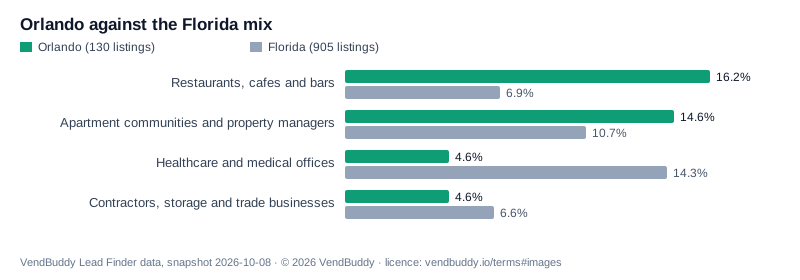
Compared with 905 Florida listings, restaurants and cafes are the over-represented group here (16.2% versus 6.9%). Healthcare and medical offices trail the state mix, 4.6% to 14.3%.
Rated listings here have a median of 4.5 stars, above the Florida median of 4.4, and 68 (52%) hold 4.5 or better on at least 10 reviews.
Late traffic is strong: 55 of 79 listings with hours close after 9 PM at least once a week (Florida: 34%).
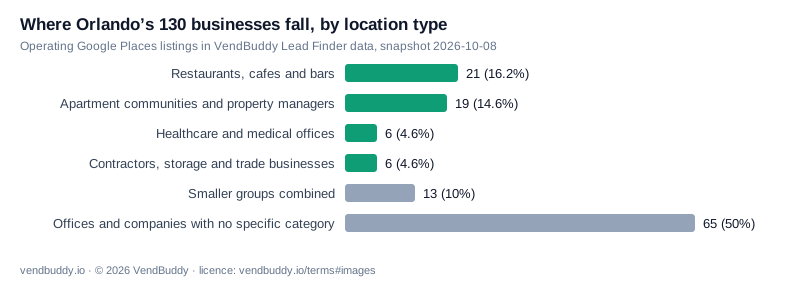
| Location type | Listings | Share | Florida share |
|---|---|---|---|
| Restaurants, cafes and bars | 21 | 16.2% | 6.9% |
| Apartment communities and property managers | 19 | 14.6% | 10.7% |
| Healthcare and medical offices | 6 | 4.6% | 14.3% |
| Contractors, storage and trade businesses | 6 | 4.6% | 6.6% |
| Smaller groups combined | 13 | 10% | 19% |
| Offices and companies with no specific category | 65 | 50% | 40.1% |
| Total operating listings | 130 | 100% | 905 listings |
How we counted: Google Places listings that VendBuddy’s Lead Finder looked up between May and October 2026 with a Orlando, FL address, de-duplicated by place ID, operating businesses only, grouped by their Google category. Groups under 5 listings are combined. This is the sample our users searched, not a census of every business. Snapshot 2026-10-08.
Rules before you place a machine: Florida vending hub (state permits and sales tax), and the state-by-state vending laws reference.
What the Orlando numbers mean for operators and building owners
The market read
A workable market if you choose the venue type first. Roughly 62% of the named Orlando listings are in groups rated primary or good for a snack and drink machine, behind 77% across Florida, so the list needs a filter before the first call rather than a blanket mail-out. After-hours traffic stands out: 70% of the listings that publish hours keep going past 9 PM (Florida: 34%), which favours sites that are open, and staffed, around the clock.
If you own or manage an apartment community in Orlando: 19 apartment communities and property managers came up in the Lead Finder searches vending operators ran here (14.6% of the sample, well above the 10.7% Florida share), so operators are already looking at buildings like yours. The machines the fit matrix rates primary for this kind of site are snacks and drinks, smart coolers, water vending and pet supplies. In the standard arrangement the operator buys, stocks and services the machine; tell us about the property and we pass it to an operator who covers Orlando, if one is in range. Ask for a free machine in Orlando →
Three venue types to target first in Orlando
Ranked by how many listings each type has here, how well a standard snack and drink machine suits it, and how over-represented it is against Florida.
- Apartment communities and property managers: 19 listings, 14.6% of the Orlando sample. That is 1.4 times the Florida share of 10.7%. Snack and drink fit: primary (residents want a late-night grab with no store run). Rated primary: snacks and drinks, smart coolers, water vending and pet supplies.
- Restaurants, cafes and bars: 21 listings, 16.2% of the Orlando sample. That is 2.4 times the Florida share of 6.9%. Skip the snack machine here (a kitchen or bar on site already sells food and drinks); machines rated good instead: ATMs, bitcoin ATMs and claw machines.
- Contractors, storage and trade businesses: 6 listings, 4.6% of the Orlando sample. The type is less common here than statewide (6.6%), so each one is a scarcer target. Snack and drink fit: primary (steady daily headcount, nothing to eat nearby while on shift). Rated primary: snacks and drinks, micro markets, coffee and PPE and first aid.
Florida rules that apply to a machine in Orlando
Tobacco and vape vending in Florida (Fla. Stat. § 569.007(1)(b), checked 2026-10-01): Tobacco vending is permissible only from a machine with a working lockout device controlled by the dealer, subject to the section's exceptions. By its own terms the rule is about tobacco and does not name vapor products; the federal 21+ rule below still covers e-cigarettes.
On top of that, federal rules (21 CFR 1140.14(b)(3) and 1140.16(c)(2)(ii)) allow tobacco and e-cigarette vending only where no one under 21 is present or allowed in.
Snack, drink and coffee machines carry none of that. Their paperwork is the sales tax and permit rules in the Orlando licensing section below and the Florida vending hub.
How Orlando compares with nearby markets
- Sarasota, FL (108 miles away): The mix tilts differently: healthcare and medical offices lead with 30.4% of 102 listings, where Orlando has 4.6%. Fewer listings stay open late (24% past 9 PM, 70% here).
Is Orlando a good place to start a vending machine business?
Yes — Orlando is one of the stronger starting markets covered in this guide. The Orlando, FL metro carries about 125,000 establishments across roughly 2.7M residents — about 46.3 business establishments per 1,000 people, well above the roughly 30-per-1,000 national figure, so prospecting density is working for you. Median household income is $71,000, close to the roughly $75,000 U.S. median, and that number decides more than any other whether a $2.25–$2.75 price point holds or you have to run value pricing to keep vend counts up. The metro added ~325,000 residents from 2015–2024 — one of the highest raw-population growth rates of any US metro. On the supply side, the ratio of vending machines to businesses sits well below national average in Lake Nona and the Lake Mary / Maitland corridor.
Demand here concentrates in Healthcare and Biotech, Simulation and Defense, Tourism and Hospitality Back-of-House and Aviation and Logistics, led by Healthcare and Biotech — and those workers sit in identifiable places, not spread evenly across the metro. The 5 districts mapped below (Lake Nona; Maitland and Lake Mary corporate corridor; UCF and the Central Florida Research Park; I-Drive tourist corridor; Airport south and the Brightline corridor) are where the captive headcount actually is. Budget for 8–10% of gross in commission — commission expectations are operator-friendly by national standards. Sales tax on vends runs 6.5%. One local wrinkle to plan around: Theme park interiors are 100% concession-locked — Disney runs Compass-tier contracts, Universal runs Sodexo. The accessible play is the surrounding hospitality back-of-house and contractor ecosystem in the surrounding industrial parks. Lake Nona has no special permit regime, but Tavistock as the master developer maintains a tenant approval process for new vendors that runs 4–8 weeks.
The catch: Compass Group and Sodexo lock up the theme park interiors and the major hospital systems. That is the shape of every market this size — the marquee accounts are contracted, and the money for an independent operator is one tier down, in the buildings next door to them.
| Signal | Orlando | National reference |
|---|---|---|
| Metro population | ~2.7M | — |
| Business establishments | ~125,000 | — |
| Establishments per 1,000 residents | 46.3 | ~30 |
| Median household income | $71,000 | ~$75,000 |
| Commission expectation | 8–10% of gross | 10–15% typical |
| Sales tax on vended goods | 6.5% | varies by state |
| Demand sectors driving placements | Healthcare and Biotech, Simulation and Defense, Tourism and Hospitality Back-of-House and Aviation and Logistics | — |
| Placement districts mapped below | 5 | — |
Is Orlando a good area to start a vending machine business?
Yes — Orlando is one of the stronger starting markets covered in this guide. Orlando carries ~125,000 establishments across a 2.7M metro — about 46.3 establishments per 1,000 residents, well above the roughly 30-per-1,000 national figure, so prospecting density is working for you. Median household income is $71,000, close to the roughly $75,000 U.S. median. Start in Lake Nona, then Maitland and Lake Mary corporate corridor — both are broken out below with named placement targets. The honest constraint: Compass Group and Sodexo lock up the theme park interiors and the major hospital systems.
Can I start a vending machine business in Orlando?
Yes. Florida does not require a state-level vending operator license. Operators register for a Florida Sales Tax Account (free, online via the Florida Department of Revenue), pay 6.5% combined sales tax in Orange County (state 6 + Orange 0.5), and complete a food handler course administered by an FDACS-recognized provider if stocking food. Sales tax on vended goods: 6.5% in Orange County (state 6% + Orange surtax 0.5%); 7% in Seminole and Lake; 7.5% in Osceola. Vending sales of food are taxable; bottled water sales are exempt under Florida statute. Operators file and remit monthly through the Florida DOR. Food handler rules and the local permit quirks are broken out in full further down this page. No FL statute blocks a new operator from placing machines in Orlando — the real barrier is placement access, not paperwork.
How much do vending machines make in Orlando?
There is no city-level vending revenue dataset for Orlando, and any specific Orlando figure you see quoted is an estimate dressed up as data. What operators report nationally: a healthy snack and drink placement grosses roughly $150–$400 per machine per month, low-traffic placements sit at $75–$150, and high-density captive placements (24/7 warehouses, hospital night shift, 200-plus-person offices) clear $400–$700 or more. Gross margin lands near 50–55% before commission. Demand signals in Orlando point toward the upper half of that band: median household income is $71,000, demand concentrates in Healthcare and Biotech, Simulation and Defense, Tourism and Hospitality Back-of-House and Aviation and Logistics, and commission expectations are operator-friendly by national standards at 8–10% of gross. Model your own stops with the free route valuation calculator.
Two free tools do the two jobs this page cannot: one ranks the ZIPs, the other prices a deal. Neither needs an account.
Orlando Vending Market Overview
Orlando, FL is a market where the metro added ~325,000 residents from 2015–2024 — one of the highest raw-population growth rates of any US metro. The metro contains roughly 125,000 establishments at a median household income of $71,000, and the ratio of vending machines to businesses sits well below national average in Lake Nona and the Lake Mary / Maitland corridor. The implication for a new or scaling operator: the prospecting addressable market is large, the per-machine economics support a real business, and the gap between operator coverage and underlying demand is real enough that it shows up in routing math, not just marketing copy.
The four sectors that drive vending demand in Orlando are Healthcare and Biotech, Simulation and Defense, Tourism and Hospitality Back-of-House, Aviation and Logistics. Each has its own access pattern (badge-required vs. open lobby), break-room culture (catered vs. dependent on vending), and product-mix expectation (premium vs. value). The sections below break each down with named employers and the placement targets that actually convert.
Before you commit to a route in Orlando, work through our location scoring checklist on a sample location — it will save you the cost of a bad first placement, which is usually a year of revenue. If you are still pre-launch, our guide to starting a vending machine business walks through the entity setup, financing, and machine sourcing that comes before the prospecting phase.
Top Industries Driving Vending Demand in Orlando
The four industries below account for the bulk of high-revenue vending placements in Orlando, FL. The named employers are anchor tenants — large, captive workforces that drive the local property managers' decisions about whether to install vending at all. Reading these in order also tells you what kind of operator wins which placement: the apparel of a healthcare-pitch deck looks nothing like the apparel of an aerospace-pitch deck, and matching the fit matters more than commission percentage.
Healthcare and Biotech
Lake Nona Medical City alone hosts the Nemours Children's Hospital, the UCF College of Medicine, the Orlando VA Medical Center, the GuideWell Innovation Center, and a growing biotech cluster. AdventHealth runs the largest hospital network in Central Florida from its Altamonte and Winter Park campuses; Orlando Health anchors downtown. Hospital interiors are contract-locked; the surrounding medical office park ecosystem is wide open.
Simulation and Defense
Lockheed Martin Orlando (10,000+ employees on Sand Lake Road), Northrop Grumman, plus the Central Florida Research Park adjacent to UCF — the densest modeling-and-simulation cluster in the country. Cleared-workforce offices, sub-200 employees, no incumbent vending in most of the smaller tenants.
Tourism and Hospitality Back-of-House
Disney, Universal, SeaWorld, plus the surrounding hotel and resort ecosystem on I-Drive. Theme park interiors are Compass and Sodexo locked; the back-of-house contractor and supplier offices in the surrounding industrial parks are accessible.
Aviation and Logistics
MCO is the seventh-busiest US airport by passengers and growing fast; the airport-area logistics belt around Orlando International runs Amazon, FedEx, and a long tail of regional distribution. The new Brightline rail terminal added thousands of construction and operations workers to the south airport corridor.
For deeper revenue benchmarks by location type — apartment vs. warehouse vs. medical vs. office — see our vending machine income data and the vending costs and profit breakdown. Both are continuously updated from operator surveys.
Best Placement Districts in Orlando
The districts below are ranked by daytime worker density and operator-coverage gap, not just by population. A district with 50,000 office workers and three national operators competing already may be a worse target than a district with 20,000 office workers and zero operator presence. Orlando has a few of each — the named placement targets in each card are the actual employers and properties to prospect, not generic industry categories.
Lake Nona
17-square-mile master-planned community in southeast Orlando. Medical City anchor plus the USTA National Campus, KPMG Lakehouse, the Tavistock corporate campus, plus a growing tech and biotech tenant base. Newer buildings, fragmented property management, frequent operator gaps.
Named placement targets: Nemours Children's, the UCF College of Medicine, the Orlando VA, GuideWell Innovation Center, KPMG Lakehouse, plus the Tavistock and Lake Nona Town Center tenants
Maitland and Lake Mary corporate corridor
I-4 north of downtown — the largest concentration of mid-rise Class A office in metro Orlando outside Lake Nona. Charles Schwab, AAA, Mitsubishi Hitachi Power Systems Americas, plus dozens of mid-size financial and professional services tenants.
Named placement targets: Charles Schwab Lake Mary, AAA Heathrow, Mitsubishi Power, the Maitland Center tenants, plus the Heathrow Park corporate campus
UCF and the Central Florida Research Park
1,000-acre research park immediately east of the UCF main campus — Lockheed Martin Orlando's Sand Lake site, plus 100+ simulation and defense tenants. UCF itself runs 70,000+ students. Research park property management is fragmented across half a dozen owners.
Named placement targets: Lockheed Martin Orlando, Northrop Grumman, the Modeling and Simulation Information Analysis Center tenants, plus the surrounding research park office condos
I-Drive tourist corridor
Orlando's main hospitality artery — hotels, time-share towers, the Orange County Convention Center, plus the surrounding hospitality back-of-house workforce. Resort fitness centers, employee break rooms, and back-of-house cafeterias run on operator vending.
Named placement targets: the I-Drive convention hotels, the Orange County Convention Center back-of-house, plus the surrounding hospitality contractor offices
Airport south and the Brightline corridor
The new Brightline terminal at MCO plus the surrounding logistics build-out have created a fresh wave of construction-stage and operations-stage employer offices. Newer buildings, no incumbent vending.
Named placement targets: MCO airport admin and contractor offices, the Brightline operations center, plus the south-airport Amazon and FedEx distribution facilities
Want the list built for you? Pick one Orlando ZIP and VendBuddy delivers the 50 best-scored locations in it, enriched with the best contact on file, automatically, for $97 once.
If you are weighing whether a specific building inside one of these districts is worth pursuing, run it through our location scoring checklist first. It catches the bad-fit placements (low captive headcount, restricted access hours, existing operator relationship) before you waste a pitch on them.
FL Licenses, Permits, and Sales Tax for Vending in Orlando
Florida does not require a state-level vending operator license. Operators register for a Florida Sales Tax Account (free, online via the Florida Department of Revenue), pay 6.5% combined sales tax in Orange County (state 6 + Orange 0.5), and complete a food handler course administered by an FDACS-recognized provider if stocking food.
Sales tax in Orlando: 6.5% in Orange County (state 6% + Orange surtax 0.5%); 7% in Seminole and Lake; 7.5% in Osceola. Vending sales of food are taxable; bottled water sales are exempt under Florida statute. Operators file and remit monthly through the Florida DOR.
Food handler requirements: Florida does not run a single statewide food handler card; operators use FDACS-recognized programs. Theme-park back-of-house tenant offices typically require additional vendor onboarding through the resort's procurement portal even though no separate state license is needed.
Local quirks worth knowing: Theme park interiors are 100% concession-locked — Disney runs Compass-tier contracts, Universal runs Sodexo. The accessible play is the surrounding hospitality back-of-house and contractor ecosystem in the surrounding industrial parks. Lake Nona has no special permit regime, but Tavistock as the master developer maintains a tenant approval process for new vendors that runs 4–8 weeks.
Every researched FL market, plus the state rules in one place: our FL vending hub.
State-by-state vending laws — including license thresholds, sales tax, and food handler requirements — are summarized in our vending laws reference. If you are forming an LLC for the route, our LLC setup and tax deductions guide covers the federal and state-level deductions specific to vending operators.
Commission Rates and Negotiation in Orlando
Typical commission range in Orlando: 8–10% of gross.
Lake Nona Class A typically expects 10%; Maitland and Lake Mary settle at 8–10%; UCF research park condos frequently come in at 7%; theme park back-of-house contractor offices are commission-light because facility budgets are project-driven; Lake Nona medical office buildings often run on a $150–$300 monthly product credit instead of cash. I-Drive hotels almost always require a master service agreement through the resort's procurement portal — commission negotiated case-by-case.
Use our vending commission rates by location type for the full negotiation rubric (when to walk, when to counter with product credit, when to accept and renegotiate at renewal). The negotiating vending placements covers the actual scripts.
VendBuddy shows the best contact on file for the properties in this guide (owner or manager when available), with the emails and phone numbers we can find. Plus the contract generator, ROI calculator, and placement scoring tools you need to close.
Launch VendBuddy Free →A 3-Day Starter Route in Orlando
If you are dropping into Orlando for the first time and want to walk out with a real prospect list in 72 hours, this is the route experienced operators use. It groups districts by drive efficiency rather than by industry — you cover the most square footage with the fewest miles, which matters more in week one than perfect target prioritization.
Targets: Nemours Children's, UCF College of Medicine, Orlando VA, GuideWell, KPMG Lakehouse, plus the Lake Nona Town Center tenants
Field note: Tavistock as master developer runs a vendor approval process. Start there before knocking on individual buildings. Approval takes 4–8 weeks; queue it on Day 1 even if the rest of the route lands faster.
Targets: Charles Schwab Lake Mary, AAA Heathrow, Mitsubishi Power, Maitland Center, plus the Heathrow Park tenants
Field note: Most Class A here has a property manager handling vending across multiple buildings. Knock at the leasing office, not individual employers.
Targets: Lockheed Martin Orlando, the Central Florida Research Park tenants, plus the south-airport Amazon and FedEx distribution facilities
Field note: Research park is fragmented — expect 10–15 individual owner contacts. Airport south is the metro's freshest opportunity zone with the fewest incumbent contracts.
For the cold-email cadence to send the same evening, see our cold email scripts for property managers. The first email goes out within 24 hours of a pop-in; the second 5–7 days later. Operators who skip the same-day follow-up close at roughly half the rate of operators who do not.
Competition and Underserved Pockets in Orlando
Compass Group and Sodexo lock up the theme park interiors and the major hospital systems. Canteen and Five Star hold most of the Lockheed Martin Orlando, AdventHealth corporate, and Lake Mary Class A contracts. Local Florida operators dominate the second tier — Lake Nona medical office buildings, the UCF research park condos, the Maitland and Lake Mary mid-size tenants, and the airport south logistics. The biggest fresh opportunity is Lake Nona's continued tenant build-out and the Brightline corridor at MCO.
The lesson, in Orlando as in every other Tier-1 metro: the high-revenue marquee accounts (Fortune 500 HQs, flagship hospitals, university dining contracts) are locked under multi-year national contracts with Canteen, Five Star, Compass, or Aramark. The opportunity for an independent or regional operator is the second tier — the Class B office down the street, the medical office building two doors down from the main hospital, the apartment leasing office three blocks from a Whole Foods. Those are accessible, profitable, and almost always underserved.
Vending Machine Companies in Orlando, FL
If you manage a property in Orlando and want a machine placed, you do not pay for it — the operator buys, stocks, and services the machine and earns from what sells. Instead of calling companies one by one, submit the two-minute request at vendbuddy.io/property-managers and it gets routed to independent operators working the Orlando area; at most two receive it, and the first to claim it contacts you. How placement deals work, what commission is normal, and the national-versus-local trade-off are all in vending machine companies near me.
Orlando Vending FAQ
Can I place vending machines inside Disney or Universal?
No. Theme park interiors are 100% concession-locked — Disney runs Compass-tier contracts, Universal runs Sodexo. The accessible play is the surrounding hospitality back-of-house and supplier ecosystem on I-Drive and in the surrounding industrial parks where no incumbent contract exists.
Do I need a vending license to operate in Orlando?
Florida does not require a state vending operator license. Operators register a Florida Sales Tax Account (free, online), pay 6.5% combined sales tax in Orange County, and complete a food handler course through an FDACS-recognized provider if stocking food. There is no separate Orange County or City of Orlando vending license.
Where are the best vending opportunities in Orlando right now?
Lake Nona's continued tenant build-out, the Maitland to Lake Mary corporate corridor, the UCF Central Florida Research Park, and the south-airport Brightline corridor. All four combine high captive-employee density with thin operator coverage. Theme park interiors are locked; the surrounding back-of-house workforce is accessible.
What sales tax rate applies to vending in Orange County?
6.5% — 6% Florida state plus 0.5% Orange County surtax. Seminole and Lake are 7%; Osceola is 7.5%. Bottled water is sales-tax exempt under Florida statute. Operators file and remit monthly through the Florida Department of Revenue.
How long does the Lake Nona tenant approval process take?
Tavistock, the Lake Nona master developer, runs a vendor approval review that typically takes 4–8 weeks. Start the application before knocking on individual buildings — the approval is portable across the master-planned community, and queue time runs in parallel with the rest of the route. Building-level placements that bypass the master process risk being removed.
Essential Vending Guides
General information, not legal, tax or financial advice. Rules change, so check the official source. Revenue and income figures are examples, not promises. See our terms.