- Claw machine prizes have to fit the claw: small cabinets want light 10-40 g items, medium cabinets 45-65 g plush, per Bulk Vending World's operator reference chart.
- A common operator rule of thumb is that a winning player spends three to four times the prize's wholesale cost before they win it (Maris Plush sourcing guide).
- Match play price to the room: $0.50-$1.00 a play in laundromats and pizza shops, $1.00 in grocery and family arcades, $1.00-$2.00 in malls and entertainment centers.
- Buy from plush wholesalers and amusement distributors for repeat fills; use Amazon only to price-check or fill a gap.
- Rotate a few new prizes every visit. A glass full of the same faded plush stops pulling plays even when the settings are right.
Claw machine prizes are the whole business hiding inside a glass box. The cabinet gets a kid to stop walking. The prize is what makes them tug a parent's sleeve for one more dollar, and then one more after that. Get the prizes wrong and a $3,000 machine sits in the corner like furniture. Get them right and it quietly earns while you're at home with your own kids.
Part of our complete guide: how much does a vending machine cost.
This guide covers the part most new claw operators guess at: what to put in the machine, where to buy it, and how play price and win rate fit together so players keep coming back and you still make money. If you're still deciding whether claw machines are worth it at all, start with our claw machine business and locations guide, then come back here once you have a spot lined up.
Start with the claw, not the catalog
The most common rookie mistake is buying prizes you like instead of prizes the claw can actually lift. A claw that can't hold a prize isn't a game, it's a donation box, and players figure that out fast. Bulk Vending World publishes a free operator reference chart that lines up prize size with cabinet size, and it's a good starting point (bulkvendingworld.com):
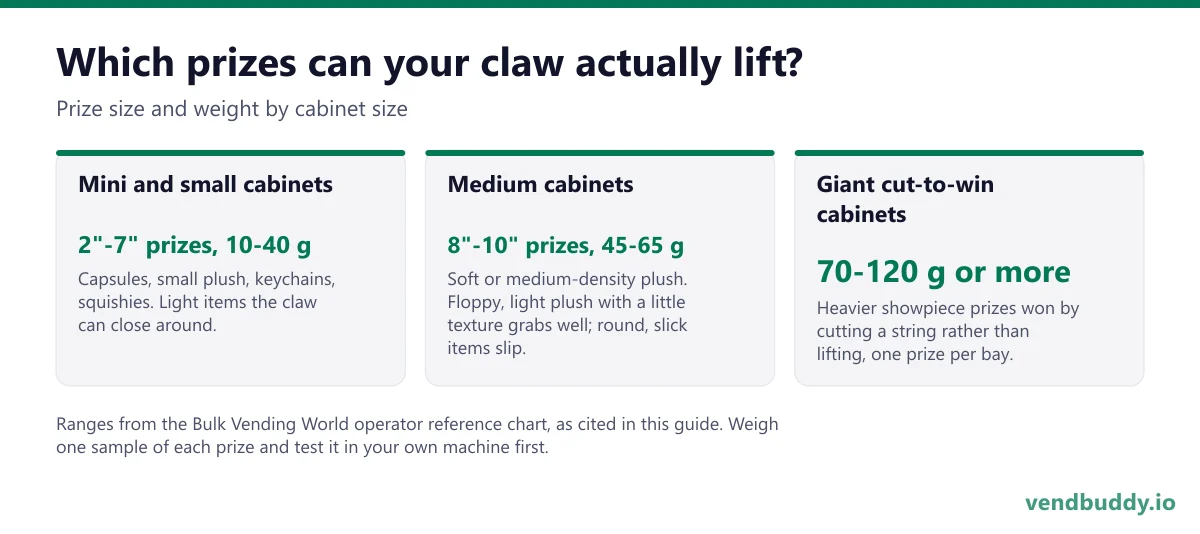
- Mini and small cabinets (roughly 2-7 inch prizes): light items around 10-40 grams. Capsules, small plush, keychains, squishies.
- Medium cabinets (roughly 8-10 inch prizes): soft or medium-density plush around 45-65 grams.
- Giant "cut-to-win" cabinets: heavier showpiece prizes of 70-120 grams or more, won by cutting a string rather than lifting, one prize per bay.
Before you buy a single case, take one sample of each prize you're considering and test it in your actual machine. Weigh it on a kitchen scale. Note how the claw closes around it. Round, slick items slip. Floppy, light plush with a little texture grabs well. That ten-minute test saves you from a pallet of prizes your machine can't move.
What to stock so people keep playing
Players don't feed a machine for the prize's dollar value. They play for the feeling of winning something they wanted, in front of someone. That means the mix matters more than any single item.
- A few "hero" prizes up front. One or two bigger, brighter items placed where everyone can see them. They're the reason people stop.
- Lots of winnable fill. The bulk of the glass should be prizes the claw can actually grab, so the machine pays out often enough to feel fair.
- Something current. Whatever kids are into this season, licensed characters, trending shapes, a popular color. A machine that looks like last year gets ignored.
- A match for the room. A bar wants something different from a pediatric clinic lobby. Small keychains and novelty items do well where adults play; plush and characters win where families play.
Then rotate. Swap in a handful of new prizes every service visit and move the ones that aren't getting picked. It's the cheapest thing you can do to keep a machine earning, and most operators skip it.
Picture the machines paying you while you sleep
That’s the real promise of vending — income that doesn’t cost you your time, and a life on your own terms. VendBuddy turns this guide into a step-by-step plan so you actually build it instead of just reading about it. Start free today.
Start building free →Where to buy claw machine prizes
There are three places operators actually buy from, and most end up using all three.
- Plush wholesalers and claw-fill suppliers. These sell mixed cases sized for crane machines, which is the easiest way to get a balanced fill. Ask for case counts, average weight per piece, and whether the plush is new-made for cranes (lighter stuffing) or retail stock.
- Amusement and arcade distributors. The same companies that sell cabinets often sell prize fill and can tell you what's moving in machines like yours.
- Amazon, for price checks and gaps. Useful for bulk plush for claw machines or capsule and keychain prizes when you need a quick top-up. For steady refills, a wholesaler usually wins on cost per piece.
Whatever you buy, check that toys meet U.S. children's product safety rules if kids will win them. Reputable wholesalers can show you testing paperwork; if a supplier can't, keep shopping.
Play price, win rate and why both matter
Every commercial claw lets the operator set how hard the claw grips and how long it holds. That's legal and normal; it's how you keep a machine from emptying in an afternoon. The goal is a machine that feels winnable. Bulk Vending World suggests tuning for roughly one clean lift every three to five attempts, adjusting grip a few percent at a time and logging the setting after every change.
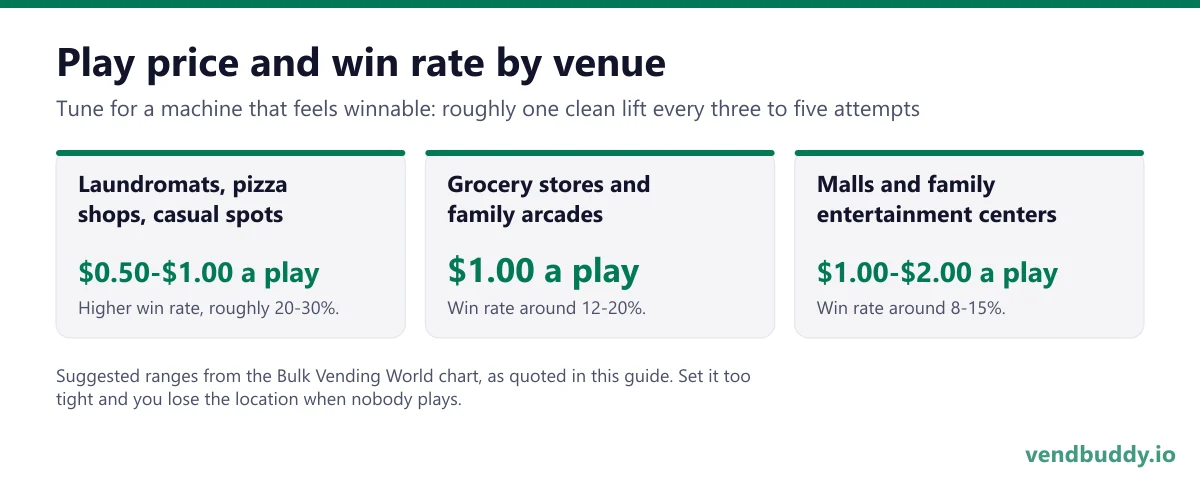
Play price follows the room. The same chart suggests:
- Laundromats, pizza shops, casual spots: $0.50-$1.00 a play, with a higher win rate of roughly 20-30%.
- Grocery stores and family arcades: $1.00 a play, around 12-20%.
- Malls and family entertainment centers: $1.00-$2.00 a play, around 8-15%.
A widely shared operator rule of thumb, repeated in Maris Plush's B2B sourcing guide (marisplush.com), is that a winning player puts in roughly three to four times the prize's wholesale cost before winning it. Treat that as a sanity check, not a target to squeeze. Set it too tight and you'll make money for a month, then lose the location because nobody plays anymore.
Illustrative example only: say your medium plush costs you $2.00 a piece and plays are $1.00. At the 3-4x rule of thumb, a prize leaves the machine for every $6-$8 played. If the machine takes $600 in a month, that's about 75-100 prizes and roughly $150-$200 in prize cost before the location's commission. Your real numbers will depend on your venue, your prizes and your settings.
A simple restocking routine
Claw machines are one of the easier machines to service, which is part of why people like them as a first business. A routine that works:
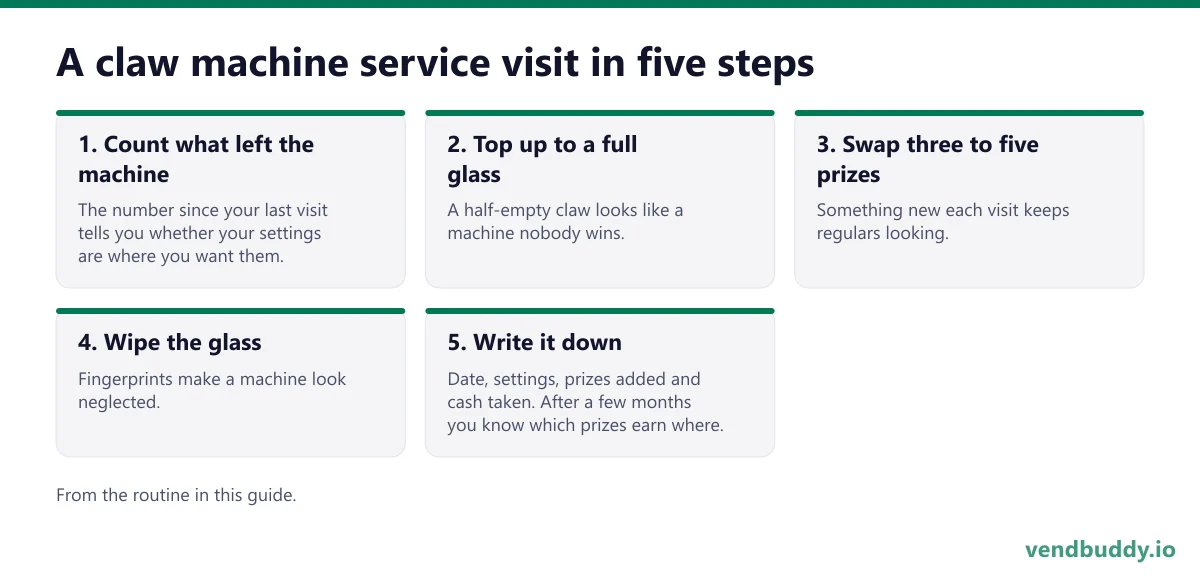
- Count what left the machine since last visit. That number tells you whether your settings are where you want them.
- Top up to a full, inviting glass. A half-empty claw looks like a machine nobody wins.
- Swap three to five prizes for something new.
- Wipe the glass. Fingerprints make a machine look neglected.
- Write down the date, settings, prizes added and cash taken. After a few months you'll know exactly which prizes earn in which locations.
Your next step is one good location
Most people who start a claw route didn't know any of this a year ago. They weren't experts. They just learned what to stock, found one good spot, and got the first machine earning. That first machine is what buys back the first few hours of your week.
The hard part usually isn't the prizes. It's finding businesses with steady family foot traffic and someone who can say yes. VendBuddy shows you which nearby businesses fit a claw machine and who decides, so you can walk in with a plan. Search your area free and see what's around you.
Frequently Asked Questions
What prizes work best in a claw machine?
Light, slightly textured plush and small novelty items that match the claw size. Bulk Vending World suggests 10-40 g items for small cabinets and 45-65 g plush for medium cabinets. Add one or two eye-catching hero prizes and rotate a few new items every visit.
Where do operators buy claw machine prizes?
Mostly from plush wholesalers and claw-fill suppliers that sell mixed cases sized for crane machines, plus amusement distributors. Amazon is useful for price checks and quick top-ups, but wholesalers usually win on cost per piece for regular refills.
How much should a claw machine play cost?
It depends on the venue. A common operator guide puts casual spots like laundromats and pizza shops at $0.50-$1.00 a play, grocery stores and family arcades at $1.00, and malls and entertainment centers at $1.00-$2.00.
Is it legal to adjust a claw machine payout?
Commercial claw machines are built so operators can set grip strength and hold time, and adjusting them is normal. Some states and cities regulate skill and prize games, so check local amusement device rules and keep the machine genuinely winnable.
What is selling, which buildings say yes, and the numbers before you buy a machine. Free, confirm from your inbox, unsubscribe in one click. Refer one friend and get 25 VendBuddy credits.
General information, not legal, tax or financial advice. Rules change, so check the official source. Revenue and income figures are examples, not promises. See our terms.