- A PPE vending machine usually isn't a cash business. Under OSHA rules, employers must provide most required PPE at no cost to workers, so the buyer is the employer, not the person at the machine.
- The main model is controlled dispensing: workers badge in, take what they need, and the employer gets a usage report and a monthly bill. Fastenal alone reported about 127,000 weighted bin and vending devices installed at the end of 2024.
- There is also a smaller pay-per-item model for public places like transit hubs, hospitals and construction gates, selling masks, earplugs, gloves and hand warmers.
- The best locations are plants, warehouses, distribution centers and construction sites with 50+ workers per shift. Start with one site and a usage report before you scale.
A PPE vending machine business runs on a different deal than snacks. In most workplaces, the person taking the gloves from the machine doesn't pay for them. The employer does. Once you understand that, you know who you're selling to, what to charge and where the machine belongs.
- Why the employer pays: the OSHA rule behind PPE vending
- The three PPE vending models
- What to stock in a PPE vending machine
- Machines that work for PPE
- What it costs to start a PPE vending machine route
- The best locations for PPE vending machines
- How to pitch the safety manager
- How to price a PPE vending deal
Part of our complete guide: how to find vending machine locations.
That is good news. A business that buys safety glasses every week has a budget for it, a problem with waste, and a reason to want a machine that tracks who took what.
Why the employer pays: the OSHA rule behind PPE vending
Federal workplace rules say that protective equipment used to meet OSHA standards "shall be provided by the employer at no cost to employees" (OSHA 29 CFR 1910.132(h)(1)). There are exceptions. Employers don't have to pay for non-specialty steel-toe boots, non-specialty prescription safety glasses that workers can wear off the job, everyday clothing, or ordinary weather gear like winter coats, rain gear and sunscreen.
So in a plant or a warehouse, a coin-op machine selling required earplugs and cut gloves to workers is the wrong model. The right model is a machine the employer pays for, which gives each worker controlled access.
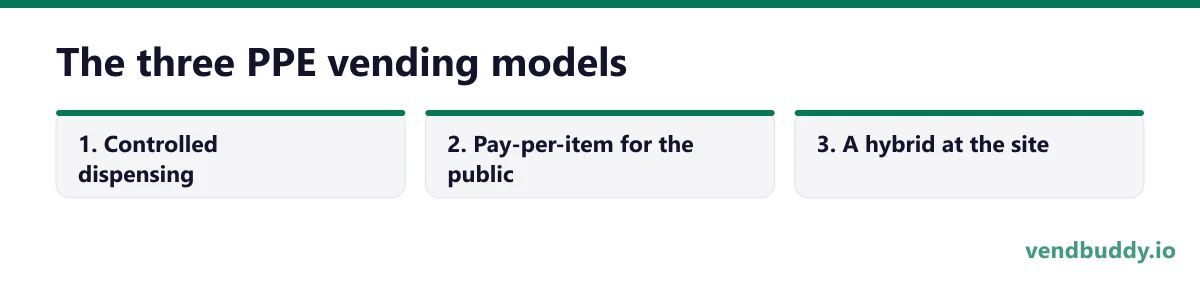
The three PPE vending models
1. Controlled dispensing (employer pays)
This is where most of the money is. Workers scan a badge or enter an ID, take the item, and the machine logs it. The employer gets a usage report and a single invoice. They pay for the product plus a service margin, or a monthly fee for the machine and service.
It's a proven market. Fastenal, the industrial supplier, reported 126,957 weighted FASTBin and FASTVend device installations at the end of 2024, up 12.2% from the year before (Fastenal 2024 annual report). Big suppliers have scale. A local operator has speed, a person who shows up, and the willingness to serve a 60-person plant that a national account rep won't visit.
2. Pay-per-item for the public
Some places sell PPE to people who aren't employees: visitors, commuters, contractors without their own gear. Think hospital entrances, transit stations, airports, event venues and construction site gates. Here, a card-reader machine selling masks, earplugs, gloves, hand sanitizer and hand warmers works like any other vending machine. Cashless matters. In 2025, 78% of food and beverage vending sales were cashless (Cantaloupe Micropayment Trends Report 2026), and someone grabbing earplugs at a gate isn't carrying quarters.
3. A hybrid at the site
A machine can do both: badge-free items for contractors and visitors, and badge-controlled items for employees. This works well at construction sites and distribution centers with lots of temporary workers.
Picture the machines paying you while you sleep
That’s the real promise of vending — income that doesn’t cost you your time, and a life on your own terms. VendBuddy turns this guide into a step-by-step plan so you actually build it instead of just reading about it. Start free today.
Start building free →What to stock in a PPE vending machine
Stock what the site burns through, not what looks complete. Ask the safety manager for last quarter's PPE orders and start there. Common fast movers:
- Hand protection: nitrile gloves, cut-resistant gloves in several sizes, work gloves
- Eye and ear: safety glasses, anti-fog wipes, foam earplugs, banded earplugs
- Respiratory: N95 respirators and dust masks, where the site's program allows
- Small consumables: batteries, box cutter blades, marking pens, tape, hand warmers in winter
- High-visibility: vests and arm bands for visitors and new hires
Respirators need care. A site with a respiratory protection program has fit-testing rules, so stock only the models the safety manager has approved.
Machines that work for PPE
A spiral snack machine can sell small boxed items, but bulky or odd-sized PPE needs other equipment:
- Locker-style machines with individual doors for vests, boxed gloves and larger items
- Coil machines with wide spirals for glasses, earplugs, and gloves in pouches
- Smart cabinets and weighted bins that track what's taken by weight or by door, for high-volume consumables
For controlled dispensing, the software matters as much as the machine. The employer will want reports by person, department and item. Ask any equipment seller to show you the report before you buy.
What it costs to start a PPE vending machine route
Costs depend on the machine type more than anything else. A used coil machine that can hold boxed gloves and glasses is the cheapest way in, often a few thousand dollars or less. Locker-style machines and smart cabinets with badge readers cost more, and the software that produces usage reports may carry a monthly fee. Get quotes that list the machine, the badge reader, the software and installation separately.
Product is your second cost. In the employer-paid model, ask for a short payment term or a deposit on the first fill, because you are fronting inventory for a business that pays by invoice.
The best locations for PPE vending machines
You want sites with lots of workers, steady PPE use and someone who cares about waste. Look for:
- Manufacturing plants with 50 or more people per shift and multiple shifts
- Warehouses and distribution centers, especially ones that hire seasonal workers
- Construction sites and contractor yards, for gloves, glasses and hi-vis at the gate
- Food processing, where gloves, hairnets and beard covers go fast
- Hospitals and clinics, mostly for the public pay-per-item model
Many of these are already good snack and drink locations. If you service a plant's break room, you're already inside. Ask the plant manager about PPE spend on your next visit. Our guides on warehouse and factory vending machines and vending machines for manufacturing plants cover how to pitch those buildings. For a warehouse-first route plan, see the warehouse vending playbook.
How to pitch the safety manager
In most plants, the safety manager or EHS lead owns the PPE budget, and operations or purchasing signs off. Bring three things to that meeting: what they spend on PPE now (ask, don't guess), a sample usage report from the machine you plan to use, and a simple trial offer. Keep the ask small. One machine, one department, 60 days. At the end of the trial, sit down with the report: what was taken, by which team, and how that compares with what they were ordering before. That conversation is how one department turns into the whole plant.
How to price a PPE vending deal
Because the employer pays, you're pricing a service, not an item. Three common structures:
- Cost plus margin. You bill for the product at an agreed markup. It's simple and easy to approve.
- Monthly machine fee plus product at cost. The fee covers the machine, restocking and reports.
- Pay-per-item for the public model, priced like convenience retail.
The pitch isn't "cheaper gloves." It's a record of who took what, so waste stops being invisible. Don't promise a number you can't back up. Offer a 60-day trial with a before-and-after usage report, and let the numbers make the case.
Is a PPE vending machine business right for you?
It suits operators who like B2B work: fewer, bigger accounts, invoices instead of coins, and relationships with safety and operations managers. It's less about foot traffic and more about one good site that says yes. Then the next plant down the road hears about it.
It's not a fit if you want a machine you set up once and forget. These accounts expect regular restocks, accurate reports and quick fixes.
General information, not legal, safety, tax or financial advice; figures are examples. Check OSHA and site safety rules before stocking any item.
VendBuddy shows you which plants, warehouses and job sites near you are worth the walk-in. Try a free search.
Frequently Asked Questions
Do employees pay for items in a PPE vending machine?
Usually not. OSHA requires employers to provide most required PPE at no cost, so most PPE vending machines are employer-paid with badge access and usage reports. Some public places, like transit hubs and hospital entrances, use a pay-per-item machine for visitors.
What goes in a PPE vending machine?
Gloves, safety glasses, earplugs, dust masks or approved respirators, hi-vis vests, and small consumables like batteries and box cutter blades. Start with what the site already orders most, based on the safety manager's purchase history.
Where do PPE vending machines work best?
Manufacturing plants, warehouses and distribution centers, food processing plants, and construction sites with 50 or more workers per shift. Hospitals and transit stations work for the public pay-per-item model.
What is selling, which buildings say yes, and the numbers before you buy a machine. Free, confirm from your inbox, unsubscribe in one click. Refer one friend and get 25 VendBuddy credits.
General information, not legal, tax or financial advice. Rules change, so check the official source. Revenue and income figures are examples, not promises. See our terms.