- Pick the location type first, then the machine. The wrong machine in a great spot loses just as much money as the right machine in a dead one.
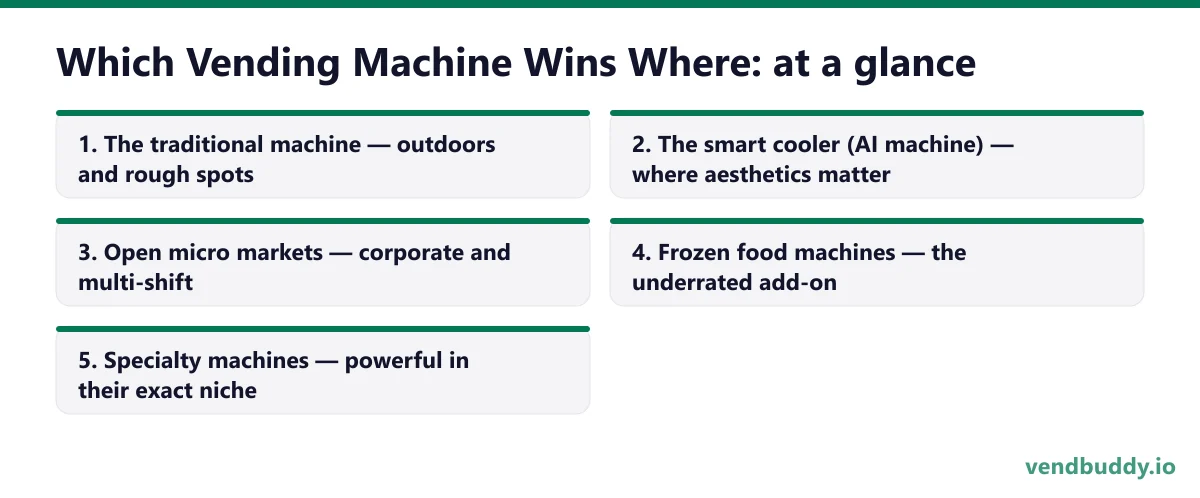
- Traditional = outdoors and rough environments. Smart coolers = apartments, offices, hospitals where looks matter. Micro markets = corporate and multi-shift facilities. Frozen = anywhere with a microwave. Specialty (ice, safety supplies, robotic coffee) = its exact niche only.
- Not sure what fits a spot? Match a machine to any location →
Most people getting into vending spend weeks agonizing over which machine to buy before they have spent a single hour deciding what kind of location they are going after. That is backwards. The machine decision follows the location decision — they are not separate questions. Here are the five machine types worth knowing, and exactly where each one wins.
Part of our complete guide: how much does a vending machine cost.
1. The traditional machine — outdoors and rough spots
This is the metal box you picture when you hear “vending machine,” and it gets a bad rap that is only half-deserved. The product mix is capped at whatever fits a spiral motor — snacks, chips, a granola bar — so no protein jugs and no household items, and every purchase is its own transaction. Well-placed smart machines routinely out-earn traditional ones several times over at the same kind of location.
But traditional still wins in two situations: outdoors and anywhere with real vandalism risk. Smart machines have cameras and locked doors, but they are not built for weather. For a poolside spot at an apartment complex, a hospital entrance, or anywhere exposed to rain, humidity, or cold, the old metal box is the right call — and it is physically harder to tamper with. More on the trade-off in smart vs. traditional vending machines.
Best for: outdoor placements and higher-crime environments.
2. The smart cooler (AI machine) — where aesthetics matter
This is where most serious operators are putting their money. Glass doors, everything visible, products sitting on shelves instead of loaded into motors — which means you can stock a $40 jug of protein powder or a $15 household item next to a $2 candy bar. The door stays locked until a card is presented and funds clear, so theft protection is built in, with cameras inside and out.
The revenue jump is real: it is common for a location capped near $1,200/month on a traditional machine to roughly double after a swap. A smart cooler does it in the same spot, with the same foot traffic, because the higher-priced items finally have somewhere to live. The catch is footprint and capacity: these units stand off the wall and hold less than you would guess, so they are not the move for a high-volume snack-and-soda location. But for high-rise lobbies, hospitals, and corridors where a building manager cares how it looks, a smart cooler is often the only machine they will say yes to. Compare the leading models in our smart-cooler comparison, or see the picks for apartments and offices.
Best for: apartment complexes, hospitals, office corridors, anywhere looks matter.
Picture the machines paying you while you sleep
That’s the real promise of vending — income that doesn’t cost you your time, and a life on your own terms. VendBuddy turns this guide into a step-by-step plan so you actually build it instead of just reading about it. Start free today.
Start building free →3. Open micro markets — corporate and multi-shift
Think hotel grab-and-go: open shelving, a self-checkout kiosk, no locked doors. People buy more when they can browse freely, so transaction values run higher than any closed machine — the experience feels like a small store. You can run a freezer of breakfast bowls beside ice cream beside protein bars and stock all of it without worrying about whether it fits a motor.
The trade-off is obvious: it is open, so theft is a real variable. But at corporate sites there is a structural protection most new operators miss — employers will let you post signage making theft grounds for termination. Almost nobody risks their job over a $4 meal, and cameras cover the rest. Micro markets are also the best fit for the return-to-office push: HR teams running break-room rewards programs become long-term partners, not just a passive contract. See how they stack up in micro markets vs. vending machines.
Best for: corporate offices, multi-shift manufacturing plants, healthcare campuses.
4. Frozen food machines — the underrated add-on
Frozen units dodge the shelf-life pressure that makes fresh and ambient products stressful — you stock it, come back when it is low, and whatever is left is still good. The product range is the real draw: burritos, pizzas, breakfast bowls, ice cream, and more, all in one machine, which is impossible with a traditional box and clunky in a smart cooler.
The move most operators miss is pairing a frozen machine beside a smart cooler at the same location. You are already driving there to restock, so the extra service cost is near zero, and it can add roughly $800–$1,500/month on the same trip — with strong margins because frozen shrinkage is minimal.
Best for: break rooms with a microwave, multi-shift facilities, anywhere already running a smart cooler.
5. Specialty machines — powerful in their exact niche
Three are worth knowing:
- Ice machines run almost entirely on autopilot and have absurd water-to-ice margins, but startup runs $40,000–$50,000 and they live or die on geography — a tourist-heavy condo area in Florida, yes; a cold northern town in October, no.
- PPE and safety-supply machines are very niche and very profitable for the right site. At a plant where everyone must wear safety glasses, people forget them — and the same instinct that makes someone buy a $2 water at work makes them pay $8 for backup gloves.
- Robotic coffee machines (the barista type, not a pod machine) flip the revenue model: when an employer subsidizes employee coffee, you bill the business directly on top of individual sales — B2B revenue plus transaction revenue, high margin and lower volatility. More on that model in office coffee service.
Best for: their exact niche, not everywhere.
The real question is the location, not the machine
Almost everyone asking “what kind of vending machine should I buy?” is asking the second question before the first. The first question is: what kind of location am I going after? A three-shift manufacturing plant with no food nearby is a completely different animal than a high-rise lobby or an outdoor pool deck. Get clear on the location type, and the machine choice falls out of it — which is the lesson most operators learn only after they have already bought the wrong box. Start from the spot: see profit by location type, score a spot with the location checklist, or just match a machine to any location.
Frequently Asked Questions
Should I choose the vending machine or the location first?
The location, every time. The machine type is dictated by the environment — outdoor vs. indoor, aesthetics-sensitive vs. high-volume, single-shift vs. multi-shift. Pick the location type first and the right machine becomes obvious.
Is a smart cooler better than a traditional vending machine?
For most indoor locations where appearance matters, yes — higher-priced products and built-in theft protection usually mean materially more revenue. But traditional still wins outdoors and in high-vandalism spots, where smart coolers are not built to survive.
What is the difference between a micro market and a vending machine?
A micro market is open shelving with a self-checkout kiosk and no locked doors, so people browse and spend more — best for corporate and multi-shift sites where signage and cameras manage theft. A machine is enclosed and better where space or security is tight.
Are frozen vending machines worth it?
Often, especially as a second machine beside a smart cooler at a location with a microwave. Low shrinkage, a broad product range, and near-zero added service cost can make it $800–$1,500/month of nearly free upside on a trip you are already making.
What is selling, which buildings say yes, and the numbers before you buy a machine. Free, confirm from your inbox, unsubscribe in one click. Refer one friend and get 25 VendBuddy credits.
Every operator we talk to wants fewer cold calls. The ones who get there have a Google Business Profile and a simple site a manager can check before replying. AI builders make that an evening job now. Wix is the mature site builder; Base44 also builds working tools like a quote form. Start with the AI website walkthrough or Wix vs Base44.
General information, not legal, tax or financial advice. Rules change, so check the official source. Revenue and income figures are examples, not promises. See our terms.