- Multifamily (200+ units): $3,000–$8,000/mo gross per machine cluster.
- Hospital / medical: $2,000–$8,000/mo — captive audience, 24/7 traffic.
- Warehouse / manufacturing: $1,500–$6,500/mo — shift workers + no outside access.
- Gym / fitness: $1,200–$5,000/mo — premium price tolerance.
- Corporate office (250+ employees): $1,500–$4,000/mo.
- Schools / colleges: $600–$3,500/mo — seasonal; slow summers.
- Hotels: $500–$2,500/mo — highly dependent on guest tier.
- Laundromats: $300–$1,200/mo — low traffic, easy to overestimate.
Every new operator asks the same question: how much will my machine actually make? The honest answer is that location type matters more than machine brand, product mix, or even the number of machines you own. Revenue swings 5x–10x depending purely on where you place. A hospital corridor machine can gross $5,000/month while a laundromat machine in the same city earns $400. Understanding why — and which location types deliver the best real returns — is the single highest-leverage decision you will make as an operator.
Part of our complete guide: how much do vending machines make.
Margins are similar everywhere (net ≈ gross × 25–30% after product costs, commission, card fees, and ~$100–$150/machine/month overhead). The entire game is gross revenue, which the location decides:
| Location (example) | Gross/mo | Net/mo |
|---|---|---|
| Hospital cluster | $5,000 | $1,350–$1,500 |
| Multifamily, 300 units | $6,000 | $1,600–$1,800 |
| Warehouse, 24/7 | $4,500 | $1,200–$1,350 |
| Large gym | $4,000 | $1,050–$1,200 |
| Office, 250 employees | $3,000 | $800–$900 |
| College campus | $2,500 | $650–$750 |
| Hotel, mid-scale | $1,500 | $390–$450 |
| Laundromat | $700 | $175–$210 |
Full math per location type below, or jump to the net-profit formula and highest ROI per dollar.
Why revenue varies so much by location type
Vending revenue is the product of three variables: foot traffic × capture rate × average ticket size. Every location type sits differently on all three axes, which is why the range across location types is so wide.
- Foot traffic — How many people physically pass the machine daily. A 300-unit apartment complex might generate 400–600 passes/day. A hospital lobby with staff, patients, and visitors can push 2,000+.
- Capture rate — What percentage of passers-by buy. Captive audiences (no other food options, long dwell times, high stress) convert at 5–12%. Casual pass-through traffic converts at 1–3%.
- Average ticket size — What they spend per transaction. Gyms tolerate $4.50 protein bars. Office workers will pay $3.50 for a premium beverage. A laundromat crowd skews budget and buys $1.50 chips.
The locations that win on all three axes — high traffic, captive, premium-tolerant — are hospitals, large warehouses, and luxury multifamily. The ones that look promising on paper but disappoint in practice are laundromats, small offices, and low-traffic hotels. Let's go through each category with real numbers.
Multifamily / apartments
Apartment complexes are one of the most consistent performer categories. Residents are repeat customers who walk past your machine every day. There are no outside food options on-site. Lease agreements give you guaranteed placement for 12–36 months.
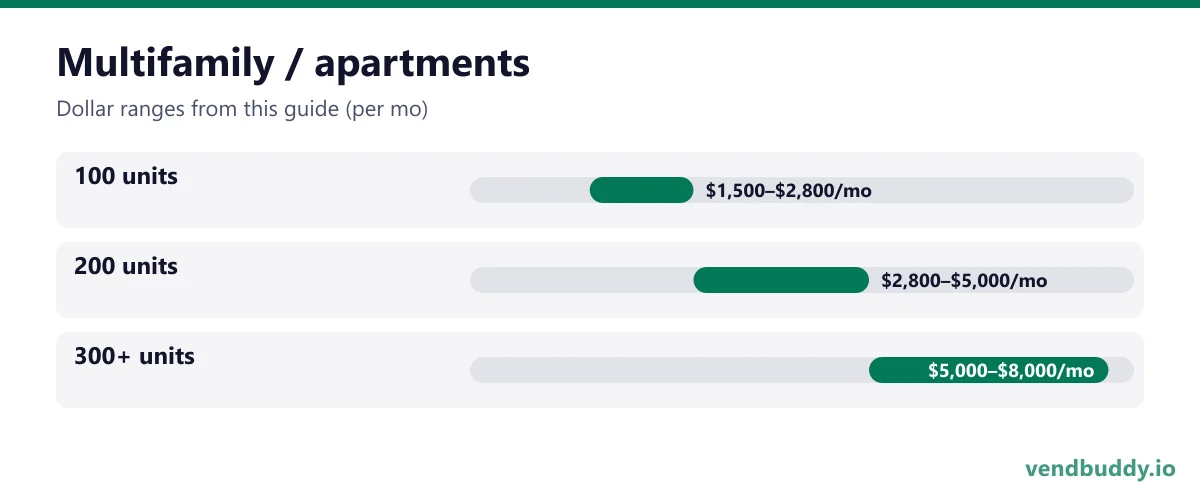
- 100 units: $1,500–$2,800/mo gross. Enough for 1 combo machine. Net ~$400–$750/mo after 45% COGS, 12% commission, fees.
- 200 units: $2,800–$5,000/mo gross across 2 machines (snacks + drinks). Net ~$750–$1,400/mo.
- 300+ units: $5,000–$8,000/mo gross — sometimes more for luxury Class A properties. At 300+ units, consider a 3-machine cluster (snacks, cold drinks, energy/water). Net ~$1,350–$2,200/mo.
Key drivers: unit count, income tier (Class A vs. C), whether residents work from home (WFH residents buy more during the day), and whether you have the amenity room exclusively. Commission is typically 10–15% of gross or $75–$200/month flat for smaller properties. Luxury properties sometimes demand a revenue share; flat fee is almost always better for you.
Watch out for: summer move-out season (July–August can drop 20%), elevator-access-only installs that slow restocking, and properties that let 3–4 operators bid simultaneously — undercut that race to the bottom by offering amenity upgrades instead of lower prices.
Picture the machines paying you while you sleep
That’s the real promise of vending — income that doesn’t cost you your time, and a life on your own terms. VendBuddy turns this guide into a step-by-step plan so you actually build it instead of just reading about it. Start free today.
Start building free →Corporate offices
Offices are a highly sought location type, but the numbers are more moderate than many operators expect — especially post-pandemic with hybrid schedules. The deciding variable is actual in-office headcount, not listed employee count.
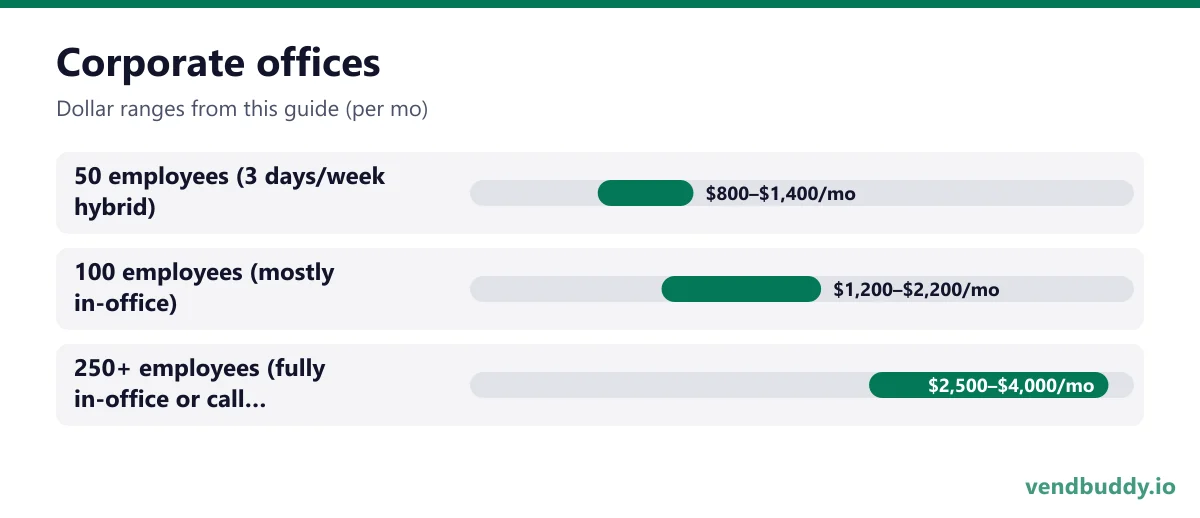
- 50 employees (3 days/week hybrid): $800–$1,400/mo gross. Breakroom machine works but is not a premium location.
- 100 employees (mostly in-office): $1,200–$2,200/mo gross. 1 snack + 1 drinks machine is optimal.
- 250+ employees (fully in-office or call center): $2,500–$4,000/mo gross. Call centers specifically are exceptional — workers are desk-bound with scheduled breaks and no outside food access during shifts.
Commission at offices is typically 12–18% of gross. Some corporate accounts pay zero commission in exchange for free service calls — worth doing for 250+ headcount locations. Product mix matters: premium beverages (sparkling water, energy drinks) and fresh-ish snacks (Kind bars, protein packs) push ticket size from $2.00 to $3.50+ average.
The hybrid-work risk is real. A pre-pandemic 150-person office running 3 days/week has the economics of a 60-person office. Always count parking lot cars at 10am on a Tuesday before signing any agreement.
Gyms and fitness
Gyms punch above their weight because members are already in a health-and-performance mindset and are conditioned to pay premium prices. A $4.50 protein shake or a $3.75 electrolyte drink is an easy impulse buy post-workout. Standard snacks underperform here; product mix is critical.
- Boutique studio (50–150 members): $1,200–$2,200/mo gross. 1 machine. Focus on protein, hydration, pre-workout.
- Mid-size gym (400–800 members): $2,200–$3,500/mo gross. 2 machines. Add a refrigerated unit with RTD protein shakes, Greek yogurt, and hard-boiled egg packs alongside a dry snack machine.
- Large box gym / 24-hour fitness (1,000+ members): $3,500–$5,000/mo gross. 3–4 machines. 24/7 access means overnight revenue you never see at office locations.
Commissions at gyms range from 15–20% given the facility's awareness that vending adds amenity value. But the higher ticket size more than compensates: average transaction at a gym vending machine is $3.20–$4.80 vs. $2.10–$2.80 at a typical office. Net margin is similar (25–30%) but applied to a higher gross. Restocking frequency is higher — plan visits every 4–5 days for a busy gym vs. weekly for an office.
Warehouses and manufacturing
Warehouse and manufacturing facilities are the hidden gem of the vending industry. The economics are uniquely favorable: workers are on-site 10–12 hours per day, cannot leave during shifts, eat all meals on-site, and often work overnight. This drives dramatically higher per-machine revenue than any office of similar headcount.
- 50–100 workers (1 shift): $1,500–$2,800/mo gross. Solid performer.
- 100–250 workers (2 shifts): $2,800–$4,500/mo gross. Two shifts effectively doubles your daily transactions without doubling headcount.
- 250+ workers (3 shifts / 24/7): $4,500–$6,500/mo gross. 24/7 operations are transformative. Night-shift workers have zero food access alternatives and buy breakfast, lunch, and snacks from your machines. A 300-worker 24/7 facility can outperform a 500-employee office that goes home at 5pm.
Machine mix: hot food (if allowed) adds $800–$1,500/mo at large facilities. Frozen meals, microwavable cups, and energy drinks are top sellers. Commission is typically 10–15%. Some facilities pay zero commission in exchange for a service SLA — always worth negotiating at the large end.
The main risk: plant shutdowns, seasonal layoffs, and relocation. Always get a 12–24 month agreement with 60-day termination notice and a removal fee clause to protect your capital.
Hospitals and medical facilities
Hospitals are the single highest-revenue location type per machine for operators who can get in. The captive-audience effect is extreme: visitors sitting with sick family members for 6–8 hours, nursing staff on 12-hour shifts, and patients with limited mobility all create sustained, high-frequency purchasing across all 24 hours.
- Small clinic / urgent care (30–80 staff): $2,000–$3,200/mo gross. High frequency, premium price acceptance.
- Community hospital (200–500 staff + visitor volume): $3,500–$6,000/mo gross. Multiple machines by department (ER waiting room, surgery waiting, staff break rooms) each perform independently.
- Regional medical center (1,000+ staff): $5,000–$8,000/mo gross per zone. Operators with exclusive contracts on a full wing report $12,000–$18,000/mo across 4–6 machines.
Getting in: hospitals usually require proof of insurance ($1M general liability minimum), ServSafe certification for food-adjacent machines, and sometimes a vendor registration process. The barrier filters out most operators, which is why these accounts are rarely available on Craigslist. Build a relationship with the facilities manager, not the administration. Commission runs 15–20% at hospitals but is negotiable for multi-machine placements. Net margin is the same 25–30% — it's just applied to a much larger gross.
VendBuddy's Location Finder surfaces hospitals, warehouses, and multifamily complexes actively looking for operators — pre-filtered by size and location type. The ROI Calculator lets you model the numbers before you pitch.
Schools and colleges
Educational institutions offer reliable volume during the academic year but require seasonal cash flow planning. The student demographic has evolved: Gen Z buyers expect cashless payment and are willing to pay $3.50–$4.00 for a premium energy drink, but $1.50 chips also move fast. Colleges outperform K–12 significantly.
- K–12 school (500–1,000 students): $600–$1,400/mo gross during school year (September–June). July–August: near zero. Net the annual average: $450–$1,050/mo factoring in the 2-month dead zone.
- Community college (2,000–5,000 students): $1,500–$2,800/mo gross during semester. Commuter students who eat on-campus all day are the best sub-segment. Summer session still generates 40–50% of in-semester revenue at community colleges.
- University / residential campus (5,000+ students): $2,200–$3,500/mo gross per machine cluster in high-traffic buildings. Dormitory-adjacent machines with 24/7 access perform significantly better than library or classroom building machines that are off-limits evenings.
USDA Smart Snacks rules apply to K–12 if you're on campus grounds — this restricts some high-margin products (certain candy, chips, full-sugar sodas) during school hours. College campuses usually have no such restriction. Commission at K–12 runs 15–20%; at colleges, 15–25% depending on exclusivity. Build summer revenue projections at 20–30% of peak for K–12, 40–60% for colleges.
If you would rather not draft exclusivity from scratch, we keep a plain-English walkthrough at get vending machine contracts. It covers term, commission, exclusivity and how either side gets out.
Hotels
Hotels are an often-misunderstood location type. The revenue ceiling is moderate and highly dependent on guest demographics. Budget motels generate dramatically less than full-service business hotels. The key insight: hotel vending competes with the lobby convenience shop, room service, and now DoorDash — so capture rates are low unless you're the only late-night option.
- Budget / extended stay (60–100 rooms): $500–$1,000/mo gross. One machine per floor is the norm; average occupancy and budget guests keep spend low.
- Mid-scale business hotel (100–200 rooms, 60–75% occupancy): $1,000–$1,800/mo gross. Business travelers have expense accounts and buy energy drinks, bottled water, and protein snacks at midnight.
- Full-service / airport hotel (200+ rooms, 80%+ occupancy): $1,500–$2,500/mo gross. Airport hotels specifically have captive late-night travelers who missed dinner and need water, snacks, and ibuprofen. Premium pricing accepted.
Commission at hotels runs 15–20%. The operator risk: occupancy fluctuates — a hotel running at 40% during a slow conference season generates half the revenue you modeled. Always ask for trailing 12-month occupancy data before placing. Products that travel well: bottled water, energy drinks, individual ibuprofen/antacid packs, protein bars, toothbrushes — the "I forgot it at home" category drives disproportionate hotel revenue.
Laundromats
Laundromats are one of the most commonly overestimated location types, especially for new operators who see foot traffic and assume it converts. The reality is trickier: customers come in, start a load, and then leave. Dwell time is split between in-store and the car. Average spend is low because laundromat customers are cost-conscious.
- Neighborhood laundromat (15–30 machines, weekday traffic): $300–$600/mo gross. One machine, basic product mix.
- Busy urban laundromat (35+ machines, 12+ hours/day open): $700–$1,200/mo gross. If there's a waiting area and no nearby food, you'll capture more of the dwell time.
The honest assessment: laundromats work best as filler accounts when you have route density in an area and need one more stop to justify a service run. They rarely justify being the primary target for a new operator's first placement. Commission is typically minimal or zero given the low revenue. Product focus should be: cheap snacks, single-serve detergent pods (if allowed), water, and energy drinks for the morning rush. Net margin is the same 25–30% — it's just 25% of a much smaller number.
Net profit math by location type
Regardless of location type, the profit formula is consistent: net profit = gross revenue × 25–30%, after COGS (40–45%), commission (10–20%), card processing (5–6%), insurance/software/fuel/repairs (~$100–$150/machine/month). Here's what that looks like in practice:
- Hospital ($5,000/mo gross): ~$1,350–$1,500 net/mo per machine cluster.
- Warehouse 24/7 ($4,500/mo gross): ~$1,200–$1,350 net/mo.
- Multifamily 300 units ($6,000/mo gross): ~$1,600–$1,800 net/mo cluster.
- Gym large ($4,000/mo gross): ~$1,050–$1,200 net/mo.
- Office 250 employees ($3,000/mo gross): ~$800–$900 net/mo.
- College campus ($2,500/mo gross): ~$650–$750 net/mo (adjusted for summers).
- Hotel mid-scale ($1,500/mo gross): ~$390–$450 net/mo.
- Laundromat ($700/mo gross): ~$175–$210 net/mo.
The margin percentage is similar across the board. The difference is entirely in gross revenue — which is entirely determined by location selection. A hospital machine pays back its $5,000 purchase price in 3–4 months. A laundromat machine at the same cost takes 24–30 months. Same machine. Different location. Use the VendBuddy ROI Calculator to model exact payback at any revenue projection. That 40–45% COGS assumption is an average across the whole machine — the per-SKU spread is much wider, from legacy candy bars near 43% margin up to instant ramen and hygiene items above 85%. See the full breakdown in our vending machine profit margin research (664 real products).
To put your own location through the same math, with your product cost, commission and restock time, the Vending Profit Spreadsheet takes one machine per row and shows profit and payback for each.
Highest ROI per dollar invested
If you have $10,000 to invest, the question is not “how many machines can I buy?” — it's “how can I get the single best location?” A smaller, premium location beats a larger, mediocre one almost every time.
Consider two choices with the same $5,000 machine cost:
- Option A — 24/7 warehouse, 200 workers: $3,500/mo gross → $945/mo net → payback in 5.3 months → Year 1 net: ~$7,500.
- Option B — Laundromat, 30 machines: $600/mo gross → $162/mo net → payback in 30.9 months → Year 1 net: ~$1,944.
The warehouse is not 4× better — it's more than 15× better on first-year net cash from the same capital outlay. This is why location quality is the highest-leverage operator skill. The difference between a $30K/year vending operation and a $120K/year operation is not 4× the machines — it is consistently choosing the top tier of location types and having the pipeline to find them.
Prioritization framework:
- Tier 1 (target first): Hospitals, 24/7 warehouses, multifamily 300+ units.
- Tier 2 (strong performer): Large gyms, corporate offices 250+ (fully in-office), campus dorms.
- Tier 3 (solid filler): Multifamily 100–200 units, mid-size gyms, community colleges.
- Tier 4 (only with route density): Hotels, K–12 schools, small offices, laundromats.
If you're still finding your first location, see how to find vending locations for the prospecting system, and best vending machine locations in 2026 for the full ranked list with outreach scripts.
Frequently Asked Questions
How much does a vending machine make at an apartment complex?
At a 100-unit apartment complex, expect $1,500–$2,800/month gross from one combo machine. A 200-unit complex with two machines (snacks and drinks) generates $2,800–$5,000/month gross. A 300+ unit luxury property with a 3-machine cluster can reach $5,000–$8,000/month gross. Net profit after COGS, commission, and operating costs is 25–30% of gross. Unit count, income tier, and work-from-home rates are the main variables.
How much does a vending machine make in a warehouse or factory?
Warehouses and manufacturing facilities are among the highest-revenue location types. A single-shift facility with 50–100 workers generates $1,500–$2,800/month gross. A two-shift operation with 100–250 workers reaches $2,800–$4,500/month. A 24/7 facility with 250+ workers can generate $4,500–$6,500/month gross, because night-shift workers have zero food access alternatives. Net margin is 25–30%.
Are hospitals good locations for vending machines?
Hospitals are one of the best vending machine locations available. Captive audiences — family members waiting 6–8 hours, staff on 12-hour shifts, overnight visitors — drive 24/7 purchasing. A community hospital generates $3,500–$6,000/month gross per machine zone. Getting in requires proof of insurance ($1M general liability), sometimes ServSafe certification, and a vendor registration process. The barrier is why these accounts rarely open up — build a relationship with the facilities manager directly.
Why do laundromats underperform as vending locations?
Laundromats look promising because of foot traffic, but customers start a load and leave — they don't dwell. Capture rates are low (1–2%), and the demographic skews budget-conscious, keeping average ticket size around $1.50–$2.00. Most laundromat machines generate $300–$1,200/month gross. They work best as filler stops on an existing route but rarely justify being a primary target. The same machine in a 24/7 warehouse earns 5–8× more.
If you would rather buy something already running, operators list machines and whole routes on the VendBuddy marketplace. Most listings are small, which is usually the ones worth looking at.
Related reading: how much do vending machines make (full income spectrum from 1 machine to 40+), vending machine costs and profit breakdown (the full profit formula), how to find vending locations (prospecting system that actually works), best vending machine locations in 2026 (ranked list with outreach scripts), and how to place vending machines for maximum revenue (install and setup checklist). To project income for a specific building before you pitch it, use the free location revenue calculator — 16 property types, no signup.
Use the Machine Finder to pick a property type — bar, laundromat, gym, mall, arcade, dealership — and see the specific machines that logically fit it, with prices and where to buy.
Open the Machine Finder →What is selling, which buildings say yes, and the numbers before you buy a machine. Free, confirm from your inbox, unsubscribe in one click. Refer one friend and get 25 VendBuddy credits.
Every operator we talk to wants fewer cold calls. The ones who get there have a Google Business Profile and a simple site a manager can check before replying. AI builders make that an evening job now. Wix is the mature site builder; Base44 also builds working tools like a quote form. Start with the AI website walkthrough or Wix vs Base44.
General information, not legal, tax or financial advice. Rules change, so check the official source. Revenue and income figures are examples, not promises. See our terms.