- A bottled water vending machine sells sealed bottles from a drink machine or cooler; a water refill station filters tap water into customer jugs. They are different businesses.
- Bottled water is usually the highest-margin item in a drink machine; one 2026 operator list puts it at 70-80% margin at $1.50-$2.00 a bottle.
- A common pricing floor is about 2.5x wholesale cost with no commission, rising to 3.5-4x where the location takes 15-20%.
- Water wins in hot, active places: gyms, sports complexes, parks, warehouses, construction trailers, hospitals and transit.
- Most operators run water inside a mixed drink machine first, then dedicate a machine where water already outsells everything else.
A bottled water vending machine is about as simple as this business gets. You buy cases of water for very little, chill them, and sell them one bottle at a time to people who are thirsty right now. No trends to chase, no expiration panic, and locations love it because nobody complains about a machine full of water. It's a quiet, steady earner, and quiet and steady is exactly what lets you stop trading every hour of your week for a paycheck.
Part of our complete guide: how much does a vending machine cost.
Before we get into numbers, one thing trips people up: there are two "water vending" businesses, and they have almost nothing in common.
Bottled water vs. a water refill station
- Bottled water vending: a standard drink machine or glass-front cooler stocked with sealed bottles. You're a reseller; the product arrives ready to sell.
- Water refill stations: a machine that filters tap water through reverse osmosis and fills customers' own jugs for a per-gallon price. That's a utility-style business with plumbing, filters and water testing.
This guide covers bottled water. If the refill model is what you're after, our water refill vending guide walks through it.
Why water is the margin leader
Water is cheap to buy and sells at the same price as other drinks, which is why operators call it the best margin in the machine. One operator-facing product ranking puts bottled water at 70-80% margin, selling at $1.50-$2.00 a bottle and often costing under $0.30 a bottle wholesale (vendplacer.com). Your exact cost depends on brand, bottle size and where you buy: warehouse clubs, a beverage distributor, or a regional bottler.
The catch is that candy and chips often sell more units on impulse, so water rarely carries a whole machine alone. It carries a machine in the right location, which is the next section.
Picture the machines paying you while you sleep
That’s the real promise of vending — income that doesn’t cost you your time, and a life on your own terms. VendBuddy turns this guide into a step-by-step plan so you actually build it instead of just reading about it. Start free today.
Start building free →How to price bottled water
A useful starting rule from an operator pricing guide is a minimum markup of about 2.5x wholesale cost at a location with no commission, rising to 3.5-4x where the location takes 15-20% (VPlaced). Then sanity-check against what people nearby pay. If the gas station across the street sells a bottle for $1.79, a $3.00 bottle in an office break room will sit. In a stadium parking lot in July, it won't.
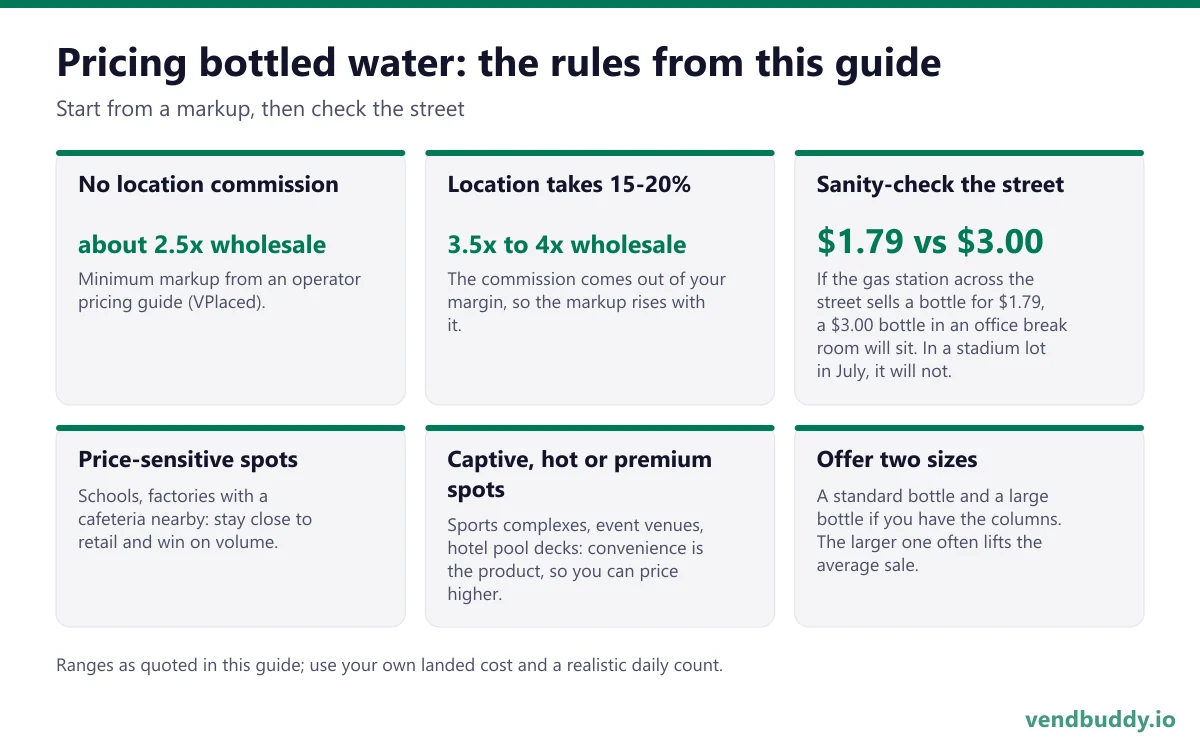
- Price-sensitive spots (schools, factories with a cafeteria nearby): stay close to retail and win on volume.
- Captive, hot or premium spots (sports complexes, event venues, hotel pool decks): you can price higher because convenience is the product.
- Offer two sizes if you have room: a standard bottle and a large bottle. The larger one often lifts the average sale.
Illustrative example only: a machine in a busy gym sells 15 bottles a day at $2.00, about $900 a month. If your landed cost is $0.30 a bottle, product runs about $135. Subtract card fees and a 10-15% location commission and you can see why water-heavy locations are good accounts. Use your own costs and a realistic daily count.
Where bottled water sells best
Water sells where people are hot, active, or stuck. Strong fits:
- Gyms, sports complexes, rec centers and climbing gyms
- Parks, trailheads and marinas with power and some shelter
- Warehouses, distribution centers and construction site trailers in warm climates
- Hospitals and clinics, where visitors want something healthy
- Transit stations, car dealerships' service lounges and self-storage offices
Our list of the best vending machine locations ranks venue types more broadly, and the most profitable products guide shows what to stock beside water.
What machine to use
You don't need a special water machine. A glass-front drink machine or a smart cooler with a card reader works. What matters:
- Cooling that keeps up in hot spaces. Warm water doesn't sell.
- A card reader. Many younger buyers carry no cash at all.
- Columns or shelves sized for your bottles, especially if you sell a large size.
- Outdoor-rated equipment if it's going outside, with shade and a secure mount.
For a price range on drink machines and coolers, see our vending machine prices guide. A common path is to start with water as the anchor in a mixed drink machine, then add a dedicated water machine at accounts where it already outsells everything else.
A stocking and service routine that works
Water is heavy and bulky, so the routine is built around not making extra trips.
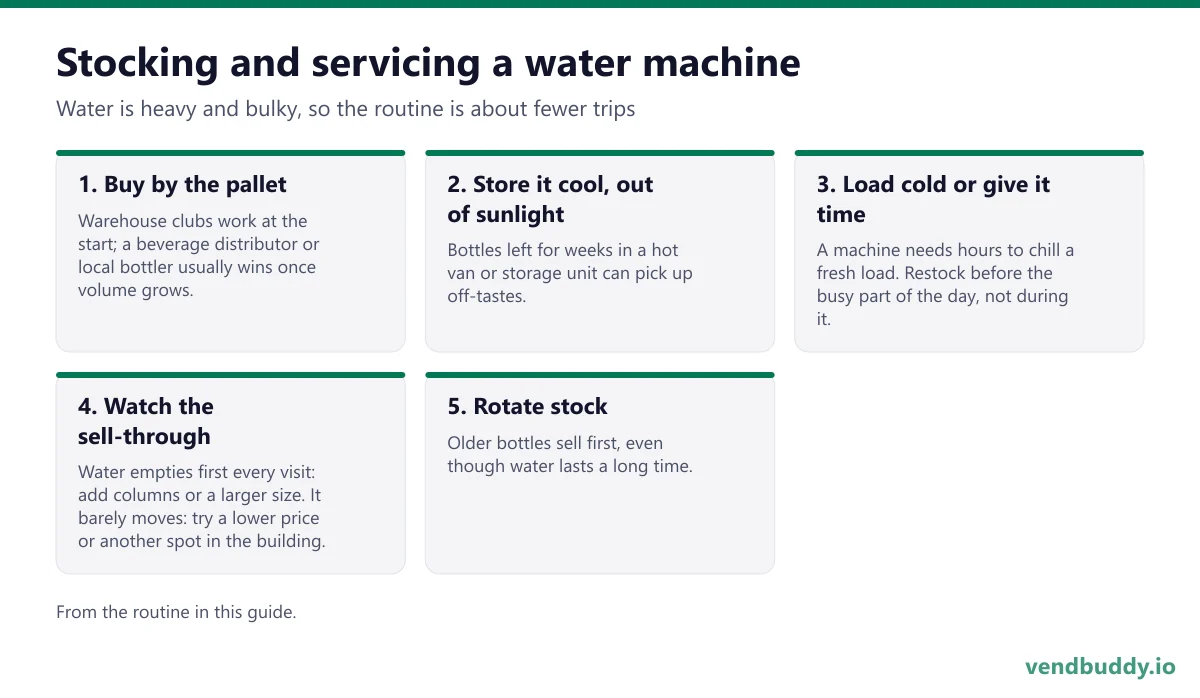
- Buy by the pallet once you have a few machines. Warehouse clubs work at the start; a beverage distributor or local bottler usually wins once volume grows.
- Store it cool and out of sunlight. Plastic bottles left in a hot van or storage unit for weeks can pick up off-tastes.
- Load cold or give it time. A machine needs hours to chill a fresh load, so restock before the busy part of the day, not during it.
- Watch the sell-through. If water empties first every visit, add columns or a larger size. If it barely moves, try a lower price or a different location in the building.
- Rotate stock so older bottles sell first, even though water lasts a long time.
How to pitch a water machine to a location
Water is one of the easiest machines to say yes to, so keep the pitch short. Tell the gym manager or site supervisor three things: their people will always have cold water on hand without anyone on staff selling it, you handle every restock and repair, and you'll pay a commission or simply provide the service at no cost, whichever fits the account. Offer a 30-day trial with a clear way out. Most managers have heard a complaint about members or crews running out of water, and that's the problem you're solving. Bring a one-page summary they can forward to whoever signs off.
Common mistakes
- Pricing like a stadium in an office. Captive pricing only works where people are actually captive.
- Skipping the card reader. A thirsty customer with no cash walks away.
- Putting the machine where nobody stops. Near the gym floor, the field exit or the loading dock beats a quiet hallway.
- Under-cooling. An old compressor in a hot space sells warm water, and warm water doesn't sell.
Starting simple
Water is a great first product because it's forgiving: long shelf life, no melting, no fragile packaging. Most operators who start this way didn't know the business either. They found one gym or job site where people were thirsty, put in a machine, and learned from there. That first location is what turns this from an idea into income.
VendBuddy helps with the part that's actually hard: finding nearby businesses where people are active all day and knowing who can approve a machine. Search your area free and see what's near you.
Frequently Asked Questions
Is a bottled water vending machine profitable?
It can be, because bottled water has the highest margin in most drink machines. One 2026 operator list puts it at 70-80% margin at $1.50-$2.00 a bottle. Profit depends on location volume, your wholesale cost and the location's commission.
How much should I charge for water in a vending machine?
A common floor is about 2.5x your wholesale cost with no commission and 3.5-4x where the location takes 15-20%. Then check nearby retail prices so your price makes sense for that location.
What is the difference between a bottled water vending machine and a water refill machine?
A bottled water machine sells sealed bottles from a standard drink machine or cooler. A water refill machine filters tap water and fills customers' own containers by the gallon, which involves plumbing, filters and water testing.
Where do water vending machines sell best?
Hot, active or captive places: gyms, sports complexes, parks, warehouses and construction trailers, hospitals, transit stations and service lounges.
What is selling, which buildings say yes, and the numbers before you buy a machine. Free, confirm from your inbox, unsubscribe in one click. Refer one friend and get 25 VendBuddy credits.
General information, not legal, tax or financial advice. Rules change, so check the official source. Revenue and income figures are examples, not promises. See our terms.