- Realistic all-in for machine #1: $2,000–$5,000. The single biggest variable is used vs new.
- Machine: $1,500–$3,500 used, $3,000–$6,000+ new. Used is the right call for machine #1 — the used-buying guide.
- Everything else combined — initial stock, card reader, LLC, insurance, moving gear — typically adds $500–$1,500.
- The most expensive line item is invisible: a bad location. It costs the same as a good one and earns a third as much.
Vending’s honest answer to the cost question is refreshingly small: most operators place their first machine for $2,000–$5,000 all-in. Here is the full line-item budget — including the boring lines course-sellers skip — and where a lean start can safely cut.
Part of our complete guide: starting a vending machine business.
The line-item budget for machine #1
| Line item | Lean start | Comfortable start | Notes |
|---|---|---|---|
| Machine (used snack or combo) | $1,500 | $3,500 | Used is the right first move — what to check before buying. New machines ($3k–$6k+) make sense from machine 3+, not machine 1. Every type priced, used and new: the vending machine prices guide. |
| Initial inventory | $200 | $400 | Costco/Sam’s Club run. You restock from revenue after week one. |
| Card reader | $150 | $300 | Not optional in 2026 — cashless lifts sales 15–35% (reader comparison). Plus ~5–6% per-transaction fees ongoing. |
| LLC + basic liability insurance | $0–$150 | $500 | Many operators run machine #1 as a sole prop and formalize at machine 2–3; some locations require a certificate of insurance up front (~$40–60/month). |
| Moving equipment | $100 | $300 | A heavy-duty appliance dolly (see the note under this table) — or $150–$300 per move for pros. Machines weigh 500–800 lbs; budget one of the two. |
| Location acquisition | $0 | $50 | Finding and pitching locations costs shoe leather, not money — this is exactly the step VendBuddy compresses (scored locations + the best contact on file). |
On the moving line: the heavy-duty appliance dolly we point operators to is on Amazon, so check the current price there before you budget it.
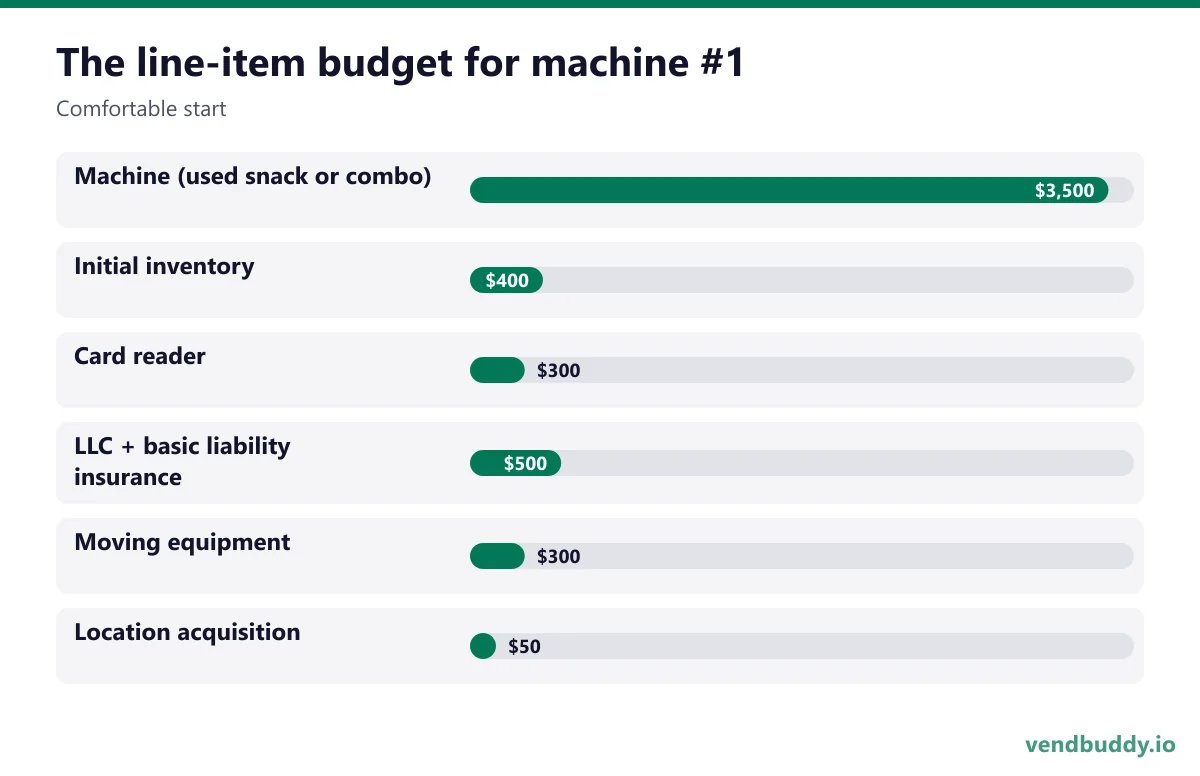
Lean total: ~$2,000. Comfortable total: ~$5,000. Below $1,500 all-in usually means a machine with a dying compressor or a location nobody measured — the two purchases that cost triple later.
The three costs beginners actually get surprised by
- The bad-location tax. A $12/day location and a $40/day location cost identical money to enter. The difference — roughly $10,000/year per machine — is decided entirely by foot traffic you can measure beforehand. This is the whole reason location scoring exists.
- Card fees + sales tax. ~5–6% of card sales to the processor, and most states tax vending sales — registering is cheap; ignoring it is not.
- The second restock trip. Under-stocked machines sell out their 3 best rows and idle for a week. Budget the second inventory run in month one, not month three.
Picture the machines paying you while you sleep
That’s the real promise of vending — income that doesn’t cost you your time, and a life on your own terms. VendBuddy turns this guide into a step-by-step plan so you actually build it instead of just reading about it. Start free today.
Start building free →What the budget looks like after machine #1
The standard path is self-funding: a decent first placement nets $150–$400/month (income data), which buys machine #2 in 6–12 months without new outside cash — the compounding loop laid out in the $5k/month math. Financing exists (options here) but debt on machine #1, before you have proven you can pick locations, is how the horror stories start.
Before any of the lines above, see which locations near you actually score — foot traffic, demographics, and the decision-maker’s direct contact. Five free credits, no card, and it de-risks every dollar in the table.
Frequently Asked Questions
How much money do you need to start a vending business in 2026?
Plan on $2,000 to $5,000 all in for your first machine. The lean end is roughly $2,000: a used snack or combination machine at about $1,500, $200 of initial inventory, a $150 card reader, and $100 of moving equipment. The comfortable end is roughly $5,000, which buys a better machine, a full stock, an LLC and liability insurance, and a professional move - with a buffer left for the second restock. Below $1,500 all in usually means either a machine with a dying compressor or a location nobody measured, and both cost triple later.
Can I start a vending machine business with $1,000?
Barely, and only via a bulk-candy or older mechanical machine ($150 to $400) route - a fine learning path, but full-size snack and drink economics start around $2,000 all-in with a used machine.
How much does a vending machine cost per month to run?
Roughly 45 to 55% of revenue goes to product, about 5 to 6% of card sales to processing, and $0 to $60 per month to insurance if required. There is no rent in most placements - some locations take a 10 to 25% commission instead.
Is $5,000 enough to start a vending machine business?
Comfortably: one well-bought used machine, full stock, card reader, LLC and insurance, with $1,000 or more left as buffer, which is exactly where most successful operators started.
Compare entry tickets across models: cost to start dropshipping, cost to start amazon fba, cost to start ai automation agency (aaa), cost to start ugc content creation, cost to start affiliate marketing, or the full cash-flow ranking.
What is selling, which buildings say yes, and the numbers before you buy a machine. Free, confirm from your inbox, unsubscribe in one click. Refer one friend and get 25 VendBuddy credits.
Want the free 38-page Ultimate Vending Guide too? Get the guide
Walk-ins and cold emails find locations. A small site with your own machine photos and a request-a-machine form lets the next one find you. Around machine three to five, an AI builder drafts it in an evening. Wix is the mature site builder; Base44 also builds working tools like a quote form. Start with the AI website walkthrough or Wix vs Base44.
General information, not legal, tax or financial advice. Rules change, so check the official source. Revenue and income figures are examples, not promises. See our terms.