- Snack (ambient) machines: 15–20+ years. Almost nothing wears out but coils and the bill acceptor.
- Refrigerated drink/combo machines: 10–15 years — the compressor is the clock.
- Smart machines / coolers: 7–10 years — the cabinet outlives the touchscreen, cameras, and vendor software support.
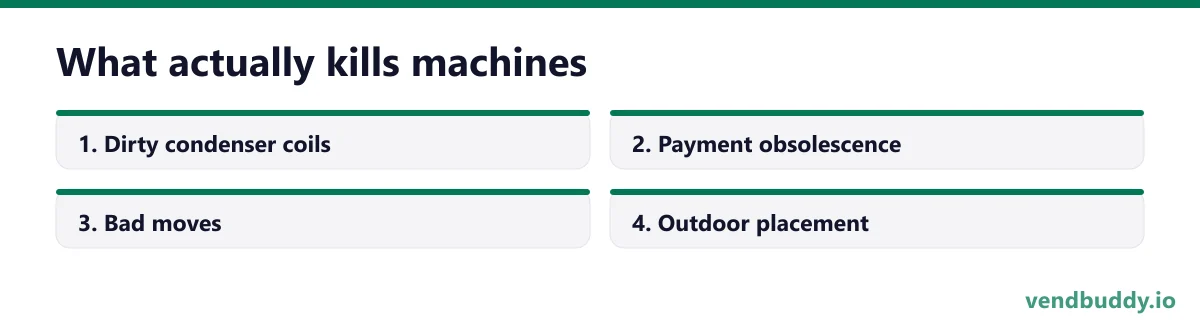
- Machines rarely die of age; they die of neglect (dirty condensers), obsolescence (no MDB/cashless path), and moves gone wrong.
Vending machines are commercial refrigeration bolted to a steel box — they are built like farm equipment, and they age like it too. The metal is effectively immortal; specific components have clocks. Knowing which clock matters for which machine type changes how you buy, what you pay, and when you walk away.
Part of our complete guide: how much does a vending machine cost.
Lifespan by machine type
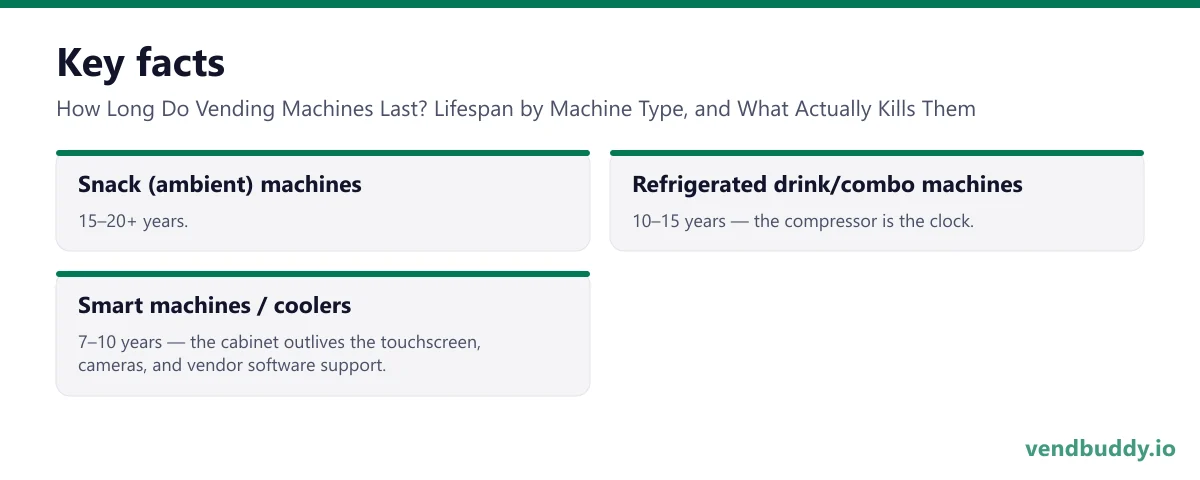
- Ambient snack machines (15–20+ years): no compressor, no real wear beyond motors, coils, and payment hardware — all cheap and replaceable. 1990s snack machines still earn daily across America.
- Refrigerated beverage & combo machines (10–15 years): the compressor defines the lifespan. First compressors typically run 8–12 years; a replacement ($300–$600 installed) buys another 8–10 if the rest of the machine justifies it.
- Glassfront coolers & food machines (10–12 years): same compressor math plus door-seal and health-code considerations for fresh food.
- Smart/AI machines (7–10 years): the box lasts, but touchscreens, cameras, and cellular modems age like phones — and the real limit is software support. A smart machine whose vendor stops updating it is done regardless of hardware.
What actually kills machines
- Dirty condenser coils. A furred coil makes the compressor run hot and constantly — this single neglect item takes years off refrigerated machines. Quarterly vacuuming is the cheapest life-extension there is (it is on our troubleshooting checklist).
- Payment obsolescence. Machines without an MDB harness can’t take modern card readers without adapters — and a cash-only machine in 2026 is economically dead long before it is mechanically dead.
- Bad moves. Tipping a refrigerated machine on its back mixes compressor oil into the refrigerant lines; running it too soon afterward can kill the compressor. Move upright, wait 4–24 hours before powering on.
- Outdoor placement. Weather exposure roughly halves lifespan — rust, UV-cooked plastics, temperature swings. Indoor machines age in slow motion by comparison.
Picture the machines paying you while you sleep
That’s the real promise of vending — income that doesn’t cost you your time, and a life on your own terms. VendBuddy turns this guide into a step-by-step plan so you actually build it instead of just reading about it. Start free today.
What lifespan means when you buy
This is why buying used is usually right: a 10-year-old snack machine has most of its life left at a third of the new price. Judge used refrigerated machines by compressor status, not age — a 12-year-old machine with a documented new compressor beats a 4-year-old machine that has never had its coils cleaned. And depreciation is your tax friend: machines qualify for Section 179 expensing (details in the tax deductions guide).
Repair or replace?
The rule most operators use: if a repair costs less than 40–50% of replacement value AND the machine can take cashless payment, repair. Replace when board/compressor repairs stack up on a cash-only machine, or when a location upgrade justifies a smart machine’s higher revenue ceiling.
A 20-year machine at a weak location is still a weak investment. VendBuddy scores locations by revenue potential and the Machine Finder matches machine types — and budgets — to them.
Frequently Asked Questions
What is the average lifespan of a vending machine?
Ambient snack machines last 15–20+ years; refrigerated drink and combo machines 10–15 (compressor-limited); smart machines 7–10, limited by screens, cameras, and software support rather than the cabinet.
Is it worth buying a 10-year-old vending machine?
Often yes — a 10-year-old snack machine has most of its life left at a fraction of new price. For refrigerated machines, judge by compressor condition and MDB/cashless compatibility, not the calendar age.
How do you make a vending machine last longer?
Vacuum the condenser coils quarterly, keep 4+ inches of rear clearance, move machines upright (rest before repowering), keep them indoors, and fix payment hardware promptly. Neglect — not age — ends most machines early.
Related: the used-machine buying guide, troubleshooting the 8 common failures, repair costs, ROI and payback math, and Section 179 depreciation. Compare machine prices in the Machine Finder.
What is selling, which buildings say yes, and the numbers before you buy a machine. Free, confirm from your inbox, unsubscribe in one click. Refer one friend and get 25 VendBuddy credits.
General information, not legal, tax or financial advice. Rules change, so check the official source. Revenue and income figures are examples, not promises. See our terms.