- Smart coolers and AI machines are taking share — higher-priced items, built-in theft protection, often double the revenue.
- Cashless is now the default, and micro markets are expanding what “vending” means.
- A retiring operator base is putting routes on the market — the clearest opportunity of the next few years.
Vending is not a static, mature industry quietly running snack boxes — it is in the middle of a real shift. Here are the trends actually reshaping operator economics, and what they mean for someone starting or scaling in 2026 and beyond. For the underlying numbers, see our vending industry statistics.
1. Smart machines move from novelty to default
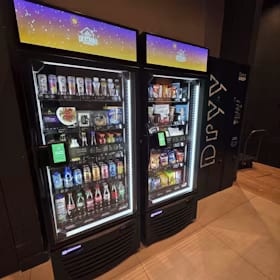
Glass-front smart coolers and AI machines are the fastest-growing segment, and for good reason: they sell higher-priced and fresh items, lock until payment clears, and frequently double the revenue of a traditional machine at the same spot. Expect building managers to increasingly expect them. See smart vs. traditional and are AI machines worth it.
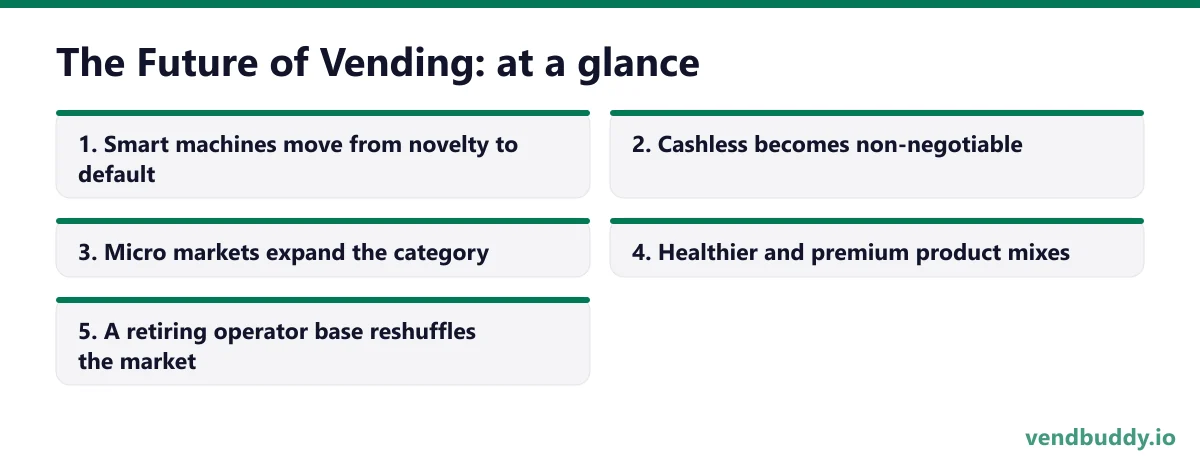
2. Cashless becomes non-negotiable
Card and mobile payment is now the default, not an upgrade. Cash-only machines leave money on the table and frustrate customers. The next wave is tighter integration between payments, inventory data, and dynamic pricing.
Picture the machines paying you while you sleep
That’s the real promise of vending — income that doesn’t cost you your time, and a life on your own terms. VendBuddy turns this guide into a step-by-step plan so you actually build it instead of just reading about it. Start free today.
Start building free →3. Micro markets expand the category
Open, self-checkout micro markets are blurring the line between vending and convenience retail, driving higher transaction values at corporate and multi-shift sites. They are one of the biggest growth vectors for operators ready to step beyond single machines — see micro markets vs. vending.
4. Healthier and premium product mixes
Wellness programs and health-conscious buyers are pushing better-for-you and premium items into the mix — often at higher margins than legacy snacks. The winning operators treat healthy as a high-value section, not a gimmick: healthy vending.
5. A retiring operator base reshuffles the market
Much of the existing operator base is aging out, putting a steady supply of routes on the market — frequently with seller financing. For newcomers, buying a route is becoming as viable an entry point as building one from scratch.
If you would rather buy something already running, operators list machines and whole routes on the VendBuddy marketplace. Most listings are small, which is usually the ones worth looking at.
What it means for you
The through-line: vending rewards operators who modernize. Use smart machines where aesthetics and revenue justify them, accept every payment type, watch your sales data, and treat location acquisition as the core skill. The fundamentals still decide everything — start with how to start and finding locations. For what is landing next rather than what already shipped, the NAMA 2026 vending innovations writeup covers what operators actually saw on the show floor.
Frequently Asked Questions
Is the vending machine industry growing?
Overall growth is modest, but the smart-machine and micro-market segments are growing quickly and raising average revenue per location, which is reshaping operator economics.
What is the future of vending machines?
More smart and AI machines, universal cashless payments, expanding micro markets, healthier and premium product mixes, and a wave of routes changing hands as longtime operators retire.
Are smart vending machines the future?
They are the clear growth leader. They unlock higher-priced products and reduce theft, and they often double revenue at the same location, so their share of the market keeps rising.
Is it too late to start a vending business?
No. A modernizing market and a retiring operator base are creating openings, not closing them. The advantage goes to operators who use current machines, accept all payments, and work locations methodically.
What is selling, which buildings say yes, and the numbers before you buy a machine. Free, confirm from your inbox, unsubscribe in one click. Refer one friend and get 25 VendBuddy credits.
General information, not legal, tax or financial advice. Rules change, so check the official source. Revenue and income figures are examples, not promises. See our terms.