Multifamily is the highest-yield vending placement category — captive residents, 24/7 demand, 100–350-unit density, and a property manager who can say yes for the entire building. The problem: property managers receive 3–5 vendor pitches per month and most are amateurish. A single-page PDF that frames your service as a resident amenity, costs the property nothing, and shows professional execution stands out immediately. This guide gives you the exact structure, four real-world examples across different property classes, the cover letter template you can adapt in 15 minutes, and the follow-up cadence that converts cold contacts into signed contracts. For a quick first email and leave-behind letter, the free pitch letter generator drafts one for an apartment community in a minute.
- Why Property Managers Say Yes
- The Proposal Anatomy: 7 Sections That Win
- Example 1: 180-Unit Class B Garden-Style — Won at 8% Commission
- Example 2: 320-Unit Class A Luxury High-Rise — Won at 0% Commission + Premium Snack Mix
- Example 3: 95-Unit Suburban Property — Declined First, Won on 3rd Follow-Up
- Example 4: 240-Unit Student Housing — Won by Leading with Revenue-Share + Cashless Requirement
- Cover Letter Template
- 3 Most Common Property Manager Objections — and How to Answer
Part of our complete guide: how to find vending machine locations.
- Amenity Frame. Position the machine as a free resident amenity that improves retention — not as a vendor asking for space.
- Zero-Cost Guarantee. You supply the machine, stock it, maintain it, and remove it if performance falls short. Nothing comes out of the property's budget.
- Resident Benefit. Lead with what residents get: cashless payment, fresh stock, 24/7 access, curated product mix for their demographic.
- Professional Execution. One-page proposal, clean photos, references from comparable properties, a signature-ready agreement. Show you've done this before.
Jump to: Why PMs say yes · Proposal anatomy · Example 1 · Example 2 · Example 3 · Example 4 · Cover letter template · Objections · Follow-up cadence · FAQ
Why Property Managers Say Yes
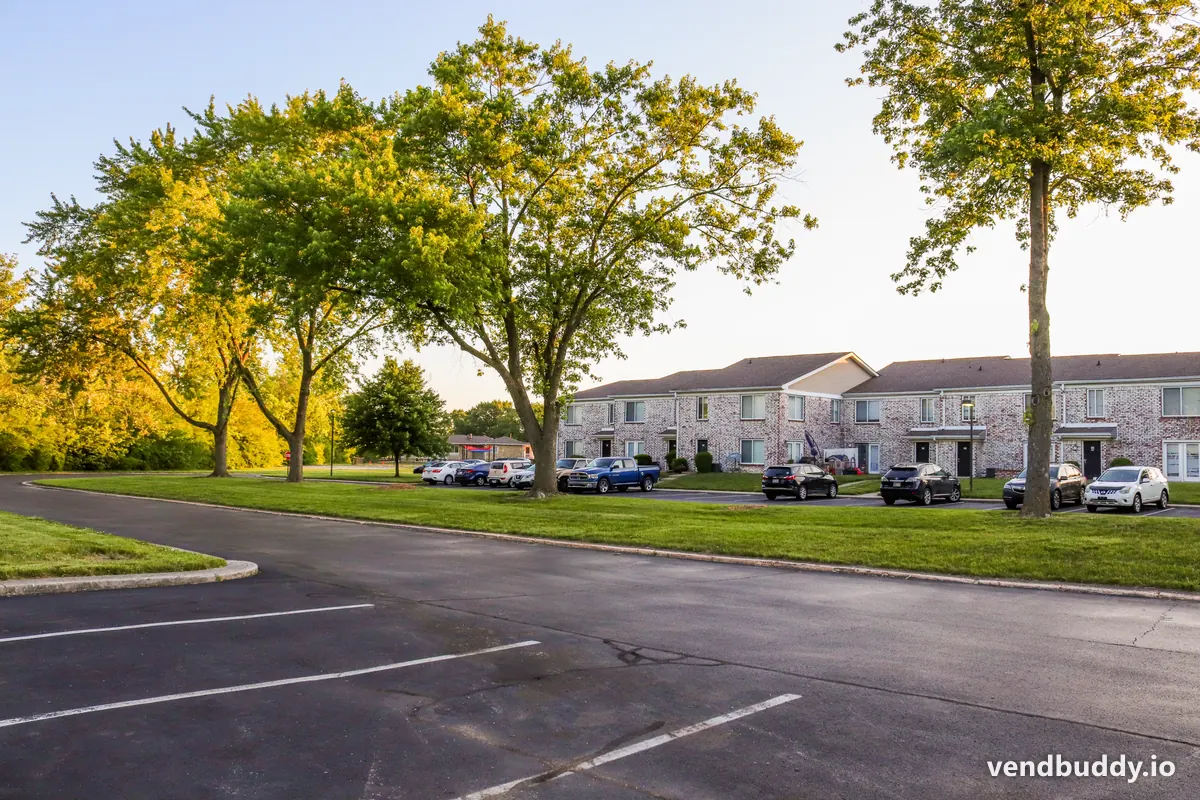
Property managers are not vending enthusiasts. They are NOI managers whose performance is measured by occupancy rates, renewal rates, and net operating income. To get a yes, your pitch has to answer three questions they're silently asking:
1. Will this help me retain residents?
Multifamily competition is fierce. Amenities — gym, co-working space, dog park, package lockers — directly influence renewal decisions. A modern, cashless snack-and-drink machine in the lobby or lounge adds tangible convenience residents notice. A 2024 National Apartment Association survey found convenience amenities ranked fourth in factors influencing lease renewals, above covered parking. You are a retention tool.
2. Will this bump NOI without capital or management overhead?
Commission income from a vending machine is pure NOI: no maintenance cost, no staff time, no capital outlay. Even a 10% commission on a machine doing $1,200/month is $120/month — or $1,440/year — for zero work. For a 200-unit property running a 5.5% cap rate, that's the equivalent of $26,000 in asset value added on paper. Lead with this math if you're pitching a sophisticated operator or REIT-owned property.
If you are not sure where to start, most people pull a free list of the businesses near them in the before they do anything else. Five contact reveals are free and there is no card, so it costs you a search and about ten minutes.
3. Will this create problems?
Property managers have been burned by vendors who disappeared after install, left a broken machine for six months, or stocked product that went stale and generated complaints. Your proposal needs a clear service SLA, a removal clause, and at least two reference properties they can call. Removing the “what if it goes wrong” objection is as important as making the upside case.
The Proposal Anatomy: 7 Sections That Win
A strong apartment vending proposal is 3–4 pages in PDF form. Single page if you're doing a leave-behind after a pop-in. Here is what each section must accomplish:
1. Cover Page
Business name, logo (even a simple one matters), your contact info, property name, and date. Keep it clean — dark background with a crisp photo of your machine performs well. One headline: something like “Modern Vending Amenity for [Property Name] Residents.”
2. Problem Statement
One paragraph. “[Property Name] residents currently have no on-site access to beverages and snacks after office hours. The nearest convenience option is [X] minutes away. Based on comparable properties we service, this is a friction point that affects resident satisfaction scores and can influence renewal decisions.” Keep it factual, not melodramatic.
3. Your Solution
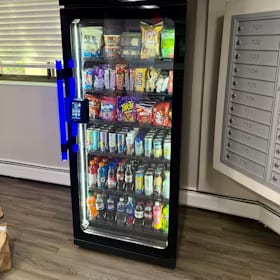
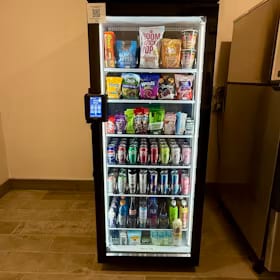
What you provide, at what cost (zero), with what product mix. Include a photo of your machine and a sample planogram. Mention cashless payment, remote monitoring, restock frequency, and your average time-to-restock after a stockout alert. If you have telemetry or a smart machine, highlight it.
4. Scope & Terms
Machine dimensions, power draw (standard 110V outlet), required footprint, and whether you need a dedicated circuit (most modern machines do not). Commission rate, payment frequency, and insurance coverage. State your removal clause clearly: 30-day written notice by either party with no penalty. This removes fear.
5. Revenue Projection
Be conservative. For a 150-unit Class B property, project $900–$1,100/month gross with 8% commission = $72–$88/month to the property. Show the math. Don't oversell. PMs who get burned by inflated projections become hostile references.
6. References
Two or three comparable properties with a contact name and phone number. If you're brand-new and have no references, offer a 90-day trial period with free removal at any point. “Try it with zero risk” is a powerful substitute for references when you're just starting.
7. Signature Block
One-page addendum or inline at the bottom of the proposal: operator signature, property representative signature, date, and a simple one-paragraph scope of service. Not a 14-page contract — that goes later. This is an agreement to proceed, which reduces friction at the yes moment.
Picture the machines paying you while you sleep
That’s the real promise of vending — income that doesn’t cost you your time, and a life on your own terms. VendBuddy turns this guide into a step-by-step plan so you actually build it instead of just reading about it. Start free today.
Start building free →Example 1: 180-Unit Class B Garden-Style — Won at 8% Commission
Property profile: 1992-built garden-style complex, suburban market, mix of young professionals and families, existing vending machine (broken, hadn't been serviced in 8 months).
Pitch approach: Walk-in during business hours, asked for the property manager by name (pulled from apartment listing site). Left a two-page leave-behind on the first visit. Followed up by email 48 hours later with a PDF proposal attached. Third contact was a call asking if they had questions.
What won it: The existing machine was broken and creating maintenance complaints. The operator offered to remove the old machine (coordinated with the machine owner) and replace it at no cost. The proposal included a “machine removal + replacement” section that directly addressed their active pain point. Commission settled at 8% — slightly above the operator's preferred 5–6% — because the property manager negotiated and it was worth accepting to lock in the location.
Revenue outcome: First 90 days averaged $1,040/month gross. Commission to property: $83/month. Machine paid back capex in month 14.
Key lesson: Existing broken vending is a better entry point than no vending. Research properties with stale or absent vendor coverage before cold-pitching.
Example 2: 320-Unit Class A Luxury High-Rise — Won at 0% Commission + Premium Snack Mix
Property profile: 2021 high-rise in an urban core, amenity-rich (rooftop, concierge, co-working lounge), managed by a national REIT. Average unit rent $3,200/month.
Pitch approach: Email-first because the property management office was not walk-in accessible. Subject line: “Premium Resident Amenity for [Property Name] — Zero Cost, Curated Product”. Attached a full 4-page PDF proposal with a premium product sample list (Liquid I.V., Olipop, Chomps, KIND bars — no generic chips). Requested a 15-minute video call.
What won it: Two things: (1) The product mix was curated for the resident demographic — the proposal listed specific brands by name and explained why each was chosen. (2) The operator offered 0% commission in exchange for the placement, framing the machine as a resident perk rather than a revenue share. The property manager said the commission conversation was “the last thing we care about — we just don't want a machine that looks like it belongs in a factory.”
Revenue outcome: $2,200/month gross at 0% commission. The location justified a premium AI cooler ($6,800 capex) which paid back in 37 months — acceptable for a Class A anchor location with low churn risk.
Key lesson: Class A properties care about brand alignment more than commission. Bring a product list and a photo of your machine. Lose the revenue-share framing entirely.
Ready to build your pitch?
VendBuddy's Pitch Scripts tool generates a customized apartment proposal in under 3 minutes. The Contract Creator produces a signature-ready agreement once you have a verbal yes.
Open Pitch Scripts →Contract Creator →Example 3: 95-Unit Suburban Property — Declined First, Won on 3rd Follow-Up
Property profile: 95-unit 2-story suburban complex, independent owner-operator (not a management company), mix of older residents and families. No existing vending.
Pitch approach: Walk-in on a Tuesday morning. The property manager was the owner's daughter; the actual decision-maker was the owner, who was not on site. Left a one-pager. First email response: “We're not interested in vending at this time.”
What won it (eventually): The operator sent a brief, non-pushy reply: “Totally understand — no pressure at all. I'll check back in a couple months in case anything changes. In the meantime, here's a quick case study from a similar property nearby if it's ever useful.” The case study was a one-page PDF showing a comparable 80-unit property's 6-month results. Six weeks later, a summer heat wave hit. The property got three maintenance requests from residents about the lack of cold drinks. The owner called back.
Revenue outcome: $620/month gross at 10% commission ($62/month to property). Modest but consistent. The operator now has two machines at this property after expanding to the pool area.
Key lesson: A soft “no” is almost always a “not right now.” The case study PDF is a powerful re-engagement tool because it shows, not tells. Keep a file of anonymized 30/60/90-day results from comparable properties.
Example 4: 240-Unit Student Housing — Won by Leading with Revenue-Share + Cashless Requirement
Property profile: University-adjacent 240-unit student housing complex, managed by a regional management company, high turnover each August. Previous vending vendor had departed; machines removed 18 months prior.
Pitch approach: Emailed the regional property manager (found on LinkedIn). Subject line: “Vending + Revenue Share for [Property Name] — Student-Focused Product Mix”. The proposal led with revenue-share projections ($180–$220/month at 15%) and specifically addressed that cashless-only payment was standard — citing that 90%+ of students use Apple Pay or a card, not cash, and that cash-accepting machines drive maintenance calls.
What won it: Student housing managers are explicitly NOI-driven and deal with constant resident complaints. The cashless-only pitch directly addressed both: more revenue (students spend more when cashless) and fewer headaches (no coin jams, no bill validator issues, no cash theft liability). The 15% commission offer was above market but the machine volume at that density ($2,100/month gross) made it viable.
Revenue outcome: $2,100/month gross at 15% = $315/month to property. Operator nets $1,785/month. Occupancy at this density drives strong returns even with higher commission.
Key lesson: Student housing is its own category. Lead with cashless, lead with revenue-share, and acknowledge the August churn cycle in your proposal (show you'll restock for the new class and adjust product mix seasonally).
Cover Letter Template
Use this as your proposal cover letter or standalone email body. Adapt the bracketed fields. Keep it under 200 words — property managers read dozens of vendor emails weekly and will skim anything longer.
Subject: Modern Vending Amenity for [Property Name] Residents — Zero Cost to You
Hi [Name],
My name is [Your Name] and I run [Business Name], a local vending service operating in [City/Area]. I work with [X] multifamily properties in the area, including [comparable property name if available], and I'd love to add [Property Name] to that list.
Here's what I'm offering: a modern, cashless snack-and-beverage machine for your common area — fully stocked, maintained, and serviced by me at zero cost to your property. You keep [X]% of gross monthly sales as a commission check, deposited directly to your account. I handle everything: installation, restocking, repairs, and removal if it ever doesn't work out (30-day notice, no penalty).
I've attached a one-page proposal with product mix, commission projections, and references from comparable properties you can call today. This typically takes 10 minutes to decide — no long-term commitment required to start.
Would you have 10 minutes this week or next to take a look? Happy to come by in person as well.
Best,
[Your Name]
[Business Name]
[Phone] · [Email]
A few notes on this template: (1) The subject line is the most important element — it answers “what do I get?” before they open the email. (2) The phrase “zero cost to your property” should appear at least twice. (3) “References from comparable properties you can call today” signals social proof even if you only have one reference. (4) The close asks for a small commitment (10 minutes) rather than a decision — this dramatically improves reply rate. (5) Never attach a contract to a first-contact email. The one-page proposal only. The contract comes after verbal yes.
If you would rather not draft the contract from scratch, we keep a plain-English walkthrough at get vending machine contracts. It covers term, commission, exclusivity and how either side gets out.
3 Most Common Property Manager Objections — and How to Answer
Objection 1: “We had a vending machine before and it was always broken / empty.”
What they're really saying: They got burned by a low-service operator and assume you're the same.
Your answer: “That's actually the most common reason I get called in — properties that had a bad experience with another operator. What I do differently: I use remote telemetry to monitor stock levels and machine status in real time, so I know before a resident does if something's off. My average restock response time is [X] hours. I'm happy to give you the contact for [reference property] — they had the same experience before I started servicing them.” Then pull out your reference sheet.
Objection 2: “We don't want the liability or the noise complaints.”
What they're really saying: They're worried about being responsible for something they didn't ask for.
Your answer: “Totally fair concern. I carry [$1M / $2M] general liability insurance and I'll name the property as an additional insured — I can send the certificate today. On noise: modern machines run at about 45 decibels, which is quieter than a refrigerator. I can walk you through the unit spec sheet right now if that helps.” Have your COI ready to email on the spot.
Objection 3: “Our residents wouldn't use it — they all drive to the store.”
What they're really saying: They're skeptical of the demand and don't want to feel silly for agreeing.
Your answer: “I hear that a lot, and then the machine surprises everyone. The highest usage tends to come from moments nobody plans for — late nights, early gym mornings, move-in weekends, building events. I'd propose a 90-day trial with no obligation: if the machine doesn't cover its own operational baseline in 90 days, I'll pull it with no questions. You literally have nothing to lose.” The 90-day trial close eliminates the perceived downside risk.
The 5-Touch Follow-Up Cadence
Most operators give up after one or two contacts. Most deals close on touch 3–5. Here is the cadence that works without becoming annoying:
- Touch 1 (Day 0): In-person pop-in or intro email with one-page proposal attached. Mention a specific observation about their property. Soft close: “Happy to answer any questions or come by to walk through the space.”
- Touch 2 (Day 2–3): Brief email: “Just wanted to make sure the proposal came through cleanly. Let me know if you have any questions — happy to jump on a quick call.” Do not resell. Just confirm delivery.
- Touch 3 (Day 7): Add value: attach a case study PDF from a comparable property, or share a news item about amenity-driven retention. “Saw this and thought it was relevant to what we talked about.” This is the touch that most often triggers a response.
- Touch 4 (Day 21): Light check-in: “Circling back in case this fell through the cracks. Any questions I can answer?” Keep it to two sentences.
- Touch 5 (Day 45): Final touch: “I'll stop pinging you after this, but I want to leave the door open for whenever the timing is right. My contact info is below and I'm always happy to revisit.” This message gets replies more often than you'd expect — the “I'll stop now” framing removes pressure and often triggers a “wait, actually” response.
After touch 5, move the contact to a quarterly list and re-engage every 90 days with a single brief message. Property managers turn over; a “no” from one PM may become a “yes” from their replacement six months later.
Frequently Asked Questions
What should a vending machine proposal to an apartment complex include?
A strong apartment vending proposal includes: a cover page with your business name and property name, a one-paragraph problem statement about the current lack of convenience access, your solution (machine specs, product mix, cashless payment), commission terms and payment schedule, your service SLA and restock frequency, proof of insurance, at least two property references, and a simple signature block. Keep the full proposal to 3–4 pages. A one-page leave-behind version for pop-in visits is also valuable.
What commission rate should I offer an apartment property manager for vending?
Standard commission ranges are 5–10% for Class B and C properties and 0–8% for Class A. Student housing often commands 10–15% because volume justifies it. Start at 5% and be willing to go to 10% if the property manager pushes back — but anchor the conversation around resident benefit and zero cost to the property, not the commission number. For very large or high-density properties, revenue-share on a sliding scale (5% on first $1,000, 10% above) can be an effective negotiating tool.
How do I pitch a vending machine to an apartment property manager who has never had one?
Lead with the amenity frame, not the vending pitch. Your opening should be: “I'm offering a free resident amenity for your building — a modern, cashless snack-and-beverage machine that I install, stock, and maintain at zero cost to you. You receive a monthly commission check.” Then answer their three silent questions: will residents use it, will it create problems, and what happens if it doesn't work out. A 90-day no-risk trial close is highly effective for first-time vending properties.
How long does it take to close an apartment vending deal?
Most apartment vending deals close in 2–6 weeks across 3–5 touch points. Decisions made by on-site property managers (Class B/C, independent owners) can move faster — sometimes in the same week as your first visit. Decisions made by regional managers or REIT management companies typically take 3–8 weeks due to approval layers. A strong proposal with a signature block reduces close time because it makes “yes” as easy as printing and signing one page.
Apartment communities are the friendliest first yes in vending and the easiest one to fumble at the agreement stage. The Location Playbook carries the walk-in script with an apartment variant, twelve answered objections, and a plain-English placement agreement a community manager can sign without sending it to legal.
See what is inside →Related reading: How to Negotiate Vending Machine Locations · Best AI Vending Machines for Apartments · Property Manager Said No? The Recovery Playbook · How to Find Vending Locations · Vending Machine Contracts 101
What is selling, which buildings say yes, and the numbers before you buy a machine. Free, confirm from your inbox, unsubscribe in one click. Refer one friend and get 25 VendBuddy credits.
Walk-ins and cold emails find locations. A small site with your own machine photos and a request-a-machine form lets the next one find you. Around machine three to five, an AI builder drafts it in an evening. Wix is the mature site builder; Base44 also builds working tools like a quote form. Start with the AI website walkthrough or Wix vs Base44.
General information, not legal, tax or financial advice. Rules change, so check the official source. Revenue and income figures are examples, not promises. See our terms.