Part of our complete guide: how much does a vending machine cost.
The SandStar smart cooler shows up in a lot of first-machine research because it’s well-marketed. We’ve now installed, trained, and serviced enough of them to have an opinion that goes past the marketing — and past the early horror stories. Here is the honest version: what goes wrong, what’s fixable, and why we ended up selling them ourselves.
What actually works about the SandStar
The form factor is genuinely good. The SandStar cooler is compact enough to fit apartment lobby alcoves, office corners, and small break rooms where a full combo machine won’t go. Grab-and-go with AI vision means no keypad queue and no coil jams — the door opens, the customer takes what they want, the camera bills them. Once trained, product recognition is solid. The price point is competitive for what the hardware does.
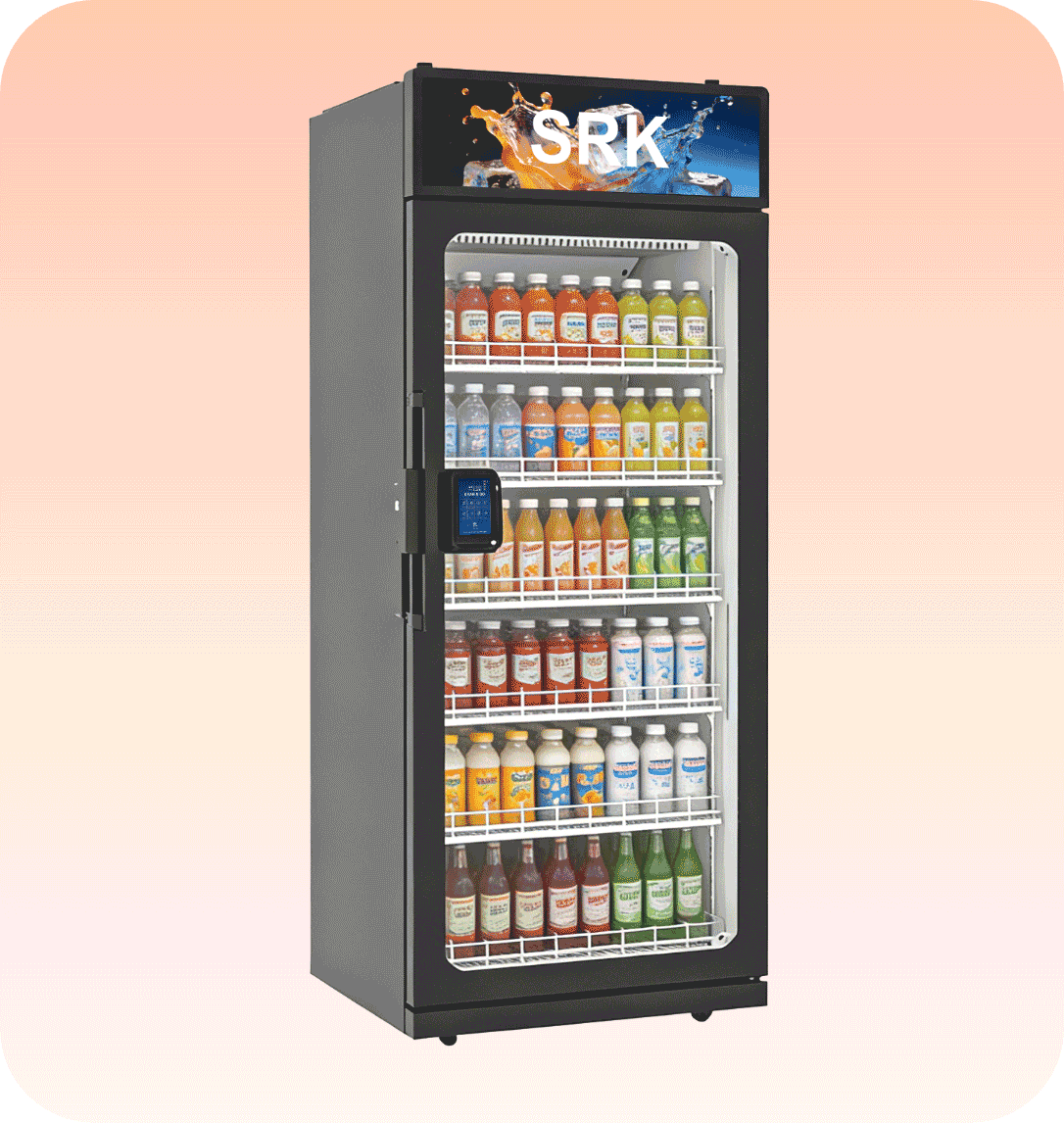
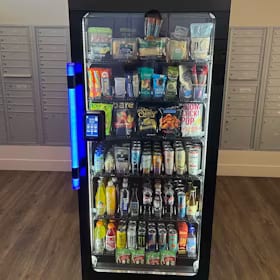
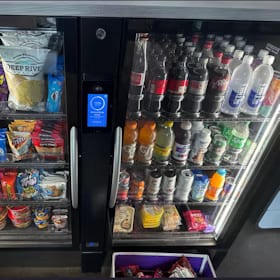
Sales velocity is strongest exactly where the footprint is the deciding factor: residential lobbies, boutique fitness studios, medical suites, and modern offices — places where a 280 lb legacy combo machine would be overkill or simply not fit. That list happens to describe most of the placements new operators actually land in 2026.
The real problems — still real, still in this review
Delivery damage risk. The most common complaint in operator communities: units arriving with freight damage — broken pushers, cracked screens. The packaging runs undersized for the product weight. Buying direct, this is your problem to chase.
AI product training takes real time. Plan on 3–5 hours for a full initial training, not the 30 minutes the marketing implies. Similar-sized items (two 12-oz energy drinks in similar cans) need deliberate fine-tuning or you launch with misbilled products.
Thin planogram tooling. The software portal lacks the shelf-layout tools platforms like 365 offer; you manage the map yourself.
Manufacturer support lag. Buying direct from the manufacturer, operators report 48–96 hour response times on hardware issues and email-heavy communication. A machine sitting dark at a commissioned location for four days is expensive.
Picture the machines paying you while you sleep
That’s the real promise of vending — income that doesn’t cost you your time, and a life on your own terms. VendBuddy turns this guide into a step-by-step plan so you actually build it instead of just reading about it. Start free today.
Start building free →Why those problems stopped being dealbreakers for us
Look at that list again: every item is a first-week problem or a buying-channel problem, not a forever problem. Delivery damage is solved by inspection on arrival and someone else owning the freight claim. Training is front-loaded once, then done. Support lag is a function of who you bought from — a US distributor who answers is the fix for a manufacturer who doesn’t.
That is exactly why we became a distributor instead of writing SandStar off. When you get a SandStar through VendBuddy, the machine is inspected before it reaches you, the freight claim is ours to fight if something arrives broken, and you get a direct line for setup and AI training instead of a 96-hour email queue. The hardware was never the weak point — the buying experience was.
Who it's best for
Best for: an operator placing compact modern venues, offices, apartment lobbies, gyms, medical suites, hotels and salons, who wants the delivery inspected and the freight claim owned by somebody else. Not for: a high-volume industrial break room, which needs more capacity than this cabinet has, or an operator who wants same-day manufacturer support, since direct response has run 48 to 96 hours. If you want the cheaper Amazon route instead, the HAHA Smart Combo US-360 at $3,299 ships on Prime with a 30-day return window.
More operators than we originally thought. If your placements are compact modern venues — offices, apartment buildings, gyms, medical buildings, hotels, salons — the SandStar’s footprint, cashless flow, and grab-and-go experience make it the best match in its price range, including for a first machine when the delivery-and-setup risk is handled for you. Where it is still the wrong pick: high-volume industrial break rooms that need big-capacity snack and drink columns — that is legacy combo territory.
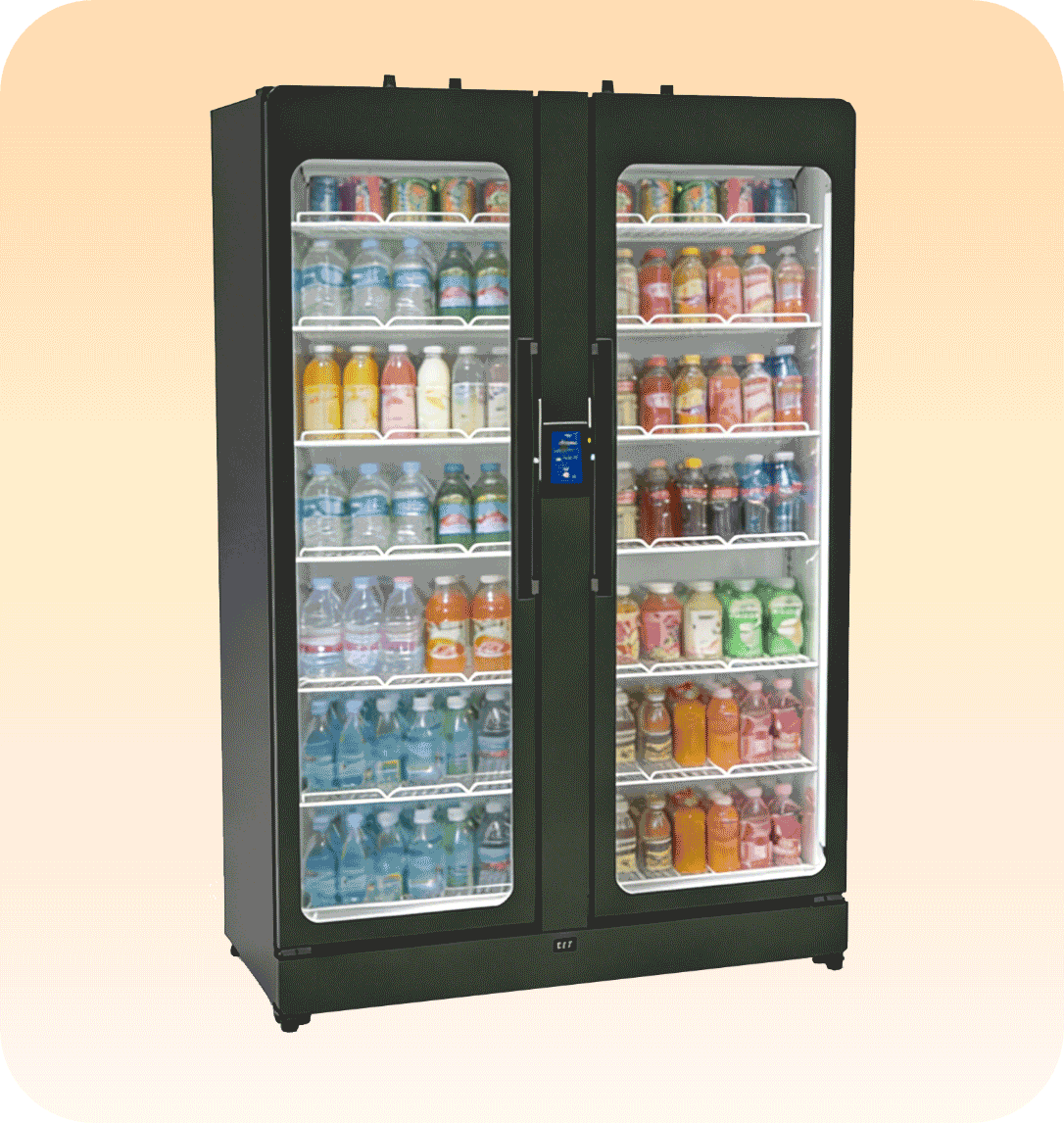
The question that follows immediately, and the one we get asked most about this machine, is what it collects once it is in the building. We do not publish per-unit sales figures for SandStar, because a machine has no revenue of its own — the building does. What we do publish is the full distribution: AI vending machine revenue per month puts a smart cooler at $1,800–$5,000 gross at a solid site, $3,000–$8,000 at a genuinely captive Class A placement, and under $1,200 where the traffic is not there — with the month-by-month ramp and the net after the $65 software licence worked through. Read that before you decide whether this cabinet pays for itself in your building.
If you only want the take-home figure rather than the whole distribution, the smart vending machine net profit per machine per month table sorts it by placement: slow, typical and captive, with the licence already subtracted.
Buying two or three of these at once is a capital decision, not an equipment line item, and operators placing a small batch often fund them on a 0% intro business credit line instead of cash, which only makes sense for a building whose foot traffic you have already counted.
Buy the SandStar direct from VendBuddy — $4,995 to $6,995
We are a direct SandStar dealer, so this is the one smart cooler on this page we sell ourselves instead of linking to. Five configurations, $4,995 to $6,995 for the cabinet, plus $65 per machine per month for the software licence. It isn’t the cheapest vision cooler on the internet, and we’d rather say that here than after you have paid.
- We inspect the cooler before it ships and own the freight claim if a carrier dents it.
- Remote training and planogram support cost nothing. An onsite technician is optional at $500 a day, two-day minimum.
- The $65 monthly licence covers the SIM and cellular data, telemetry, device management and remote support, so there’s no second connectivity bill.
- Warranty runs 3 years on the SRK series and 5 years on the VRK series.
Prefer Amazon? The HAHA Smart Combo US-360 at $3,299 ships on Prime with a 30-day return window in a combo format, and we earn an affiliate commission on it rather than a margin.
If you’d rather buy on Amazon
Want Prime shipping and Amazon’s 30-day return window instead, or need bigger capacity than a cooler format offers? The HAHA Smart Combo US-360 remains a solid combo-format route with a large operator community behind it. HAHA Smart Combo US-360, $3,299 →
The machine only earns what the location lets it. VendBuddy’s free Machine Finder matches machine types to 15+ property types with realistic revenue estimates — before you spend a dollar on hardware.
Open the Machine Finder →FAQ
Is the SandStar smart cooler a legitimate product?
Yes — a real AI smart cooler deployed by operators across the US. The known issues are operational, not legitimacy: freight-damage risk when shipped direct, a 3–5 hour AI training curve, thin planogram tooling, and slow manufacturer-direct support. All four are addressed by buying through a US distributor that inspects, ships, and supports the machine.
Is the SandStar good for a first machine?
Buying direct from the manufacturer: risky, because delivery damage and slow support are hard to absorb while you’re also learning the business. Buying through a distributor that handles inspection, freight claims, and setup: yes — the compact cashless format is one of the easiest first machines to operate day-to-day, with no coils to jam and no cash to collect.
What is the main technical thing to budget for?
AI product training. Plan 3–5 hours for a full initial planogram, and be deliberate with visually similar items so products bill correctly from day one. It is front-loaded work: once trained, adding or swapping a handful of SKUs is quick.
Related: best AI vending machines on Amazon ranked 2026, HAHA vs VEVOR vs EPEX comparison, HAHA vs Stockwell vs 365 vs Cantaloupe, how to choose the right vending machine, smart vs traditional vending machines.